


No, palm oil in baby formula is not dangerous — it is approved for use by regulatory bodies in the US, EU, and Australia. However, research consistently shows it is less efficiently absorbed than the palmitic acid found naturally in breast milk, and it can contribute to harder stools and reduced calcium absorption in some babies. "Suboptimal" is more accurate than "dangerous."
Palm Oil in Baby Formula: Why It Matters and Which Brands Skip It
By: Suzanne Renee' - June 08, 2026 - 14 Minute Read
Pick up almost any infant formula on a US supermarket shelf and read the ingredient list. Somewhere in the fats section, you will probably see it: palm oil. Sometimes labeled palm oil, sometimes hidden inside "vegetable oil blend," it shows up in the majority of baby formulas sold globally — including most of the brands Americans recognize.
But more parents are asking why it is there, what it actually does, and whether they should be looking for formulas that skip it altogether. The answer is more nuanced than "palm oil is bad" — but the science behind why some brands deliberately leave it out is worth understanding.
This guide covers what palm oil does in formula, why it ended up there in the first place, what the research actually shows about its impact on babies, and which formulas at The Milky Box skip it entirely. As always, talk to your pediatrician before making any formula decisions for your baby.
Table of Contents:
1. What Is Palm Oil and Why Is It in Baby Formula?
2. The Science: What Research Shows
3. What Palm Oil Means for Your Baby
5. Brands That Skip Palm Oil at The Milky Box
6. Brands That Still Use Palm Oil
7. How to Read a Label for Palm Oil
8. Alternatives to Palm Oil in Formula
9. Should You Switch to a Palm Oil-Free Formula?
10. FAQs
What Is Palm Oil and Why Is It in Baby Formula?
Palm oil is an edible vegetable oil derived from the fruit of the African oil palm tree (Elaeis guineensis). It is one of the most widely used vegetable oils in the world — appearing in everything from peanut butter to packaged snacks to soap. In infant formula, it shows up specifically because of its palmitic acid content.
Palmitic acid is a saturated fatty acid that makes up approximately 25% of the fatty acids in human breast milk. Since formula is designed to mimic breast milk as closely as possible, manufacturers need a fat source that delivers palmitic acid in meaningful amounts. Palm oil is one of the cheapest, most concentrated sources of palmitic acid available, which is why it became the industry default decades ago.
That last part — cheap and concentrated — matters. Palm oil is roughly half the cost of equivalent vegetable oils, and it allows manufacturers to hit fatty acid targets without using more expensive ingredients like whole milk fat. For mass-market formula companies focused on cost control, it is a logical ingredient choice.
The issue is not that palmitic acid itself is harmful. Your baby genuinely needs it. The issue is how the palmitic acid in palm oil is structured, and what that means for how your baby's body actually uses it.
The Science: What Research Shows
Here is where things get interesting. In breast milk, palmitic acid is attached to the glycerol molecule at what scientists call the sn-2 position (the middle position of the three available spots on a fat molecule). In palm oil, it is mostly attached at the sn-1 and sn-3 positions (the outer positions).
This is not a minor distinction. It changes how the fat is digested and absorbed.
Multiple studies have shown that palmitic acid in the sn-1,3 position — the structure found in palm oil — is less efficiently absorbed by infants. When pancreatic enzymes break apart these fats during digestion, the released palmitic acid can combine with calcium in the gut to form insoluble "soaps." These soaps are not absorbed; they pass through and end up in the stool.
Reduced calcium absorption A2 protein and gentle digestion. Calcium that binds to free palmitic acid is lost rather than absorbed into the body.
Harder, drier stools. The calcium-fatty acid soaps make stools firmer and more difficult to pass — a common complaint among parents whose babies are on palm oil-containing formulas.
Lower bone mineral content. In some studies, linked to the reduced calcium absorption.
Increased risk of constipation and feeding discomfort. In some babies.
The research is not unanimous — some studies show smaller effects than others, and individual babies tolerate palm oil very differently. But the mechanism is well-documented, and the European Food Safety Authority and other regulatory bodies have explicitly acknowledged the difference.
For more on broader ingredient concerns in formula, read our toxic baby formula ingredients guide.
What Palm Oil Means for Your Baby

In practical terms, here is what parents tend to notice when comparing palm oil-containing formulas to palm oil-free formulas:
Stool consistency. This is the most commonly reported difference. Babies on palm oil-free formulas typically have softer, more comfortable bowel movements. Babies on palm oil formulas more often experience firmer stools, occasional constipation, or strained feeds. Our constipation in babies guide covers this in more detail.
Feeding comfort. Some babies show signs of digestive discomfort on palm oil formulas — gas, fussiness, pulling away during feeds. This does not happen to every baby, but it is common enough that switching to a palm oil-free formula is a frequent first recommendation when parents report these issues.
Calcium absorption. While most palm oil formulas still deliver adequate calcium overall (regulatory requirements ensure this), the absorption efficiency is lower. For most healthy term babies, this is not clinically significant. For babies with specific nutritional concerns, it can matter.
Not every baby is affected. Plenty of babies do perfectly fine on palm oil-containing formulas with no observable issues. The point is not that palm oil is dangerous — it is that there are documented downsides, and many parents choose to avoid them when better alternatives exist.
For a broader look at digestive sensitivity and what to watch for, our signs your formula doesn't agree with your baby guide covers the bigger picture.
The Sustainability Angle
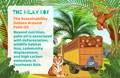
Beyond the nutritional questions, palm oil carries serious environmental concerns. The expansion of palm oil plantations is one of the leading drivers of deforestation in Southeast Asia, particularly in Indonesia and Malaysia. Critical orangutan, tiger, and elephant habitats have been destroyed at scale. Indigenous communities have been displaced. Carbon emissions from clearing peatland forests for palm cultivation are massive.
There are sustainability certifications — the Roundtable on Sustainable Palm Oil (RSPO) being the most prominent — and some brands using palm oil source from certified sustainable suppliers. This is genuinely better than uncertified palm oil. But even certified sustainable palm oil has come under scrutiny for inconsistent enforcement.
For families who weigh environmental considerations alongside nutritional ones, palm oil-free formulas remove the question entirely. The brands that skip palm oil typically use rapeseed, sunflower, coconut, or whole milk fats instead — sources with significantly lower environmental footprints.
Brands That Skip Palm Oil at The Milky Box
Here are the formulas available at The Milky Box that contain no palm oil and no palm oil — verified against current ingredient lists.
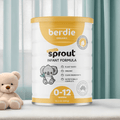
Sprout Organic — Plant-Based, Palm Oil-Free
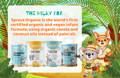
Sprout Organic is the world's first certified organic, certified vegan infant formula. The oil profile is one of the cleanest available — using a combination of organic canola oil and organic coconut oil to deliver fats without any palm oil. The full Sprout lineup is palm oil-free:
Sprout's broader appeal goes beyond just palm oil avoidance — it is also dairy-free, soy-free, lactose-free, and uses algal DHA instead of fish oil. For the full breakdown, read our 2026 Parent's Guide to Sprout Organic.
Jovie Goat — The Cleanest Goat Oil Profile
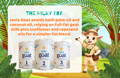
Jovie Goat takes palm oil avoidance further than almost any other goat milk formula on the market. Where most goat formulas use sunflower, rapeseed, AND coconut oil, Jovie uses only sunflower and rapeseed — no palm oil, no coconut oil. The full-fat goat milk base carries more of the fat profile, so fewer vegetable oils are needed overall.
All three stages are palm oil-free:
For a deeper look at what makes Jovie's ingredient profile stand out, read our Jovie Goat Milk Formula: The Ultimate Guide.
Bébé M — Hydrolyzed Plant-Based, No Palm Oil
Bébé M is a French organic plant-based formula classified as a Food for Special Medical Purposes — designed for babies with confirmed cow's milk protein allergies (CMPA). Its oil blend uses sweet almond, coconut, and rapeseed oils with no palm oil. For families dealing with severe protein allergies who also want to avoid palm oil, Bébé M delivers on both fronts. Read our Bébé M Anti-Reflux guide for the full picture.
Holle Goat — Palm Oil-Free Goat Heritage
Holle Goat (both the Dutch and German versions) uses an oil blend of organic sunflower oil and organic rapeseed oil — no palm oil in the goat range. Note: Holle's cow milk formulas vary, with some containing palm oil. The goat range specifically is palm oil-free across all stages.
Kendamil — Whole Milk, No Palm Oil
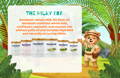
Kendamil is unique because of its whole milk approach — using full-cream milk instead of skim, which means more of the fat comes from the milk itself. The supplementary oils are sunflower, rapeseed, and coconut, with no palm oil across the lineup. Kendamil also uses algal DHA (no fish oil) and includes naturally occurring HMOs.
HiPP Comfort — Specialty Palm Oil-Free Option
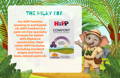
For families committed to HiPP but wanting to avoid palm oil, HiPP Comfort is a specialty formula designed for babies with digestive sensitivities — and notably, it is palm oil-free. Most other HiPP formulas (including the standard Stage 1, Stage 2, and Dutch Goat range) do contain palm oil.
Brands That Still Use Palm Oil
For full transparency, here are the formulas at The Milky Box that do contain palm oil. This is not a "do not buy" list — these are reputable, well-formulated brands with strong reputations. It just means you should know what you are choosing if avoiding palm oil is a priority.
HiPP Dutch Goat and HiPP standard cow milk formulas (Stages 1, 2, 3) — contain organic palm oil in their vegetable oil blend
Holle Cow (some variations, including the Pre and Stage 1 cow milk formulas) — contain organic palm oil
Lebenswert — contains organic palm oil
Kabrita — contains palm oil
If you are currently using one of these and your baby is doing well, there is no urgent reason to switch. But if you have noticed issues like constipation, gas, or feeding discomfort, exploring a palm oil-free alternative is a reasonable next step under your pediatrician's guidance.
How to Read a Label for Palm Oil

Palm oil shows up in baby formula ingredient lists under several names. Watch for:
Palm Oil — the most common label
Palm Olein — the liquid fraction of palm oil, also from the oil palm fruit
Vegetable oil blend — when used as a catch-all, this often includes palm oil unless specified otherwise
"Beta-palmitate" or "OPO" — this is sn-2 palmitate, a different fat structure that mimics breast milk's natural arrangement (more on this below) — not the same as standard palm oil
If a brand is palm oil-free, they almost always say so prominently on the packaging — it is a marketing point they want to highlight. If you cannot find any explicit "palm oil-free" claim and the ingredient list says "vegetable oils" without specifying which ones, the safer assumption is that palm oil is present.
For more on label reading, see our vegan baby formula FAQ Part 2 and toddler formula guide.
Alternatives to Palm Oil in Formula
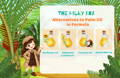
When formulas skip palm oil, they replace it with other fat sources. The most common alternatives:
Sunflower and rapeseed (canola) oil. The most common palm oil substitutes. Both deliver essential fatty acids — sunflower provides linoleic acid (omega-6), and rapeseed provides alpha-linolenic acid (omega-3). Used in Jovie, Holle Goat, Kendamil, and others.
Coconut oil. Provides medium-chain triglycerides (MCTs), which are easily digested and absorbed. Used in Sprout, Bébé M, Kendamil, and HiPP Comfort. Some parents prefer to avoid coconut oil too due to its high saturated fat content — Jovie is one of the few formulas that skips both palm AND coconut oil.
Whole milk fat. Used by Kendamil (cow line) and naturally by Jovie (full-fat goat milk). This is the most breast-milk-like approach because milk fat contains its own naturally occurring palmitic acid in the sn-2 position — without the issues associated with palm oil-derived palmitic acid.
Beta-palmitate (sn-2 palmitate, OPO) This is a specially structured fat that delivers palmitic acid in the sn-2 position — mimicking the structure found in breast milk. It is more expensive and used in some premium formulas as a "best of both worlds" approach. HiPP Comfort uses beta-palmitate as part of its formulation.
For families weighing different approaches, our best organic baby formula guide walks through the full landscape.
Should You Switch to a Palm Oil-Free Formula?

The honest answer: it depends on your baby and your priorities.
Switching makes sense if:
Your baby is experiencing constipation, hard stools, or digestive discomfort on a palm oil-containing formula
Calcium absorption is a concern (premature babies, babies with growth issues — under pediatric guidance)
Avoiding palm oil aligns with your family's environmental values
You want the cleanest possible ingredient profile and there is no specific medical reason to stick with the current formula
Sticking with your current formula is reasonable if:
Your baby is thriving — gaining weight well, having comfortable feeds, regular soft stools
The palm oil-containing formula is what your pediatrician specifically recommended for your baby's needs
The transition risk (potential digestive adjustment, taste preferences) outweighs the perceived benefit
If you are considering a switch, do it gradually over 5 to 7 days — never cold turkey unless your pediatrician advises it. Our switching formula guide walks through the process step by step.

Frequently Asked Questions
Is palm oil in baby formula dangerous?
Why do most US formulas use palm oil?
Cost and ease of formulation. Palm oil is the cheapest concentrated source of palmitic acid, and it has been the industry default for decades. The market is slowly shifting as more parents demand palm oil-free options, but most US drugstore formulas (Enfamil, Similac, Gerber, etc.) still use it.
Is palm olein the same as palm oil?
Palm olein is the liquid fraction of palm oil — both come from the same source and carry the same concerns. If a label says "palm olein," consider it equivalent to palm oil for the purposes of avoidance.
Does breast milk contain palm oil?
No. Breast milk contains naturally occurring palmitic acid as part of milk fat — but it is structured at the sn-2 position, which is easily and efficiently absorbed. The issue is not palmitic acid itself; it is the structure of palm oil-derived palmitic acid.
Will switching to a palm oil-free formula fix my baby's constipation?
In many cases, yes — but not always. Constipation can have multiple causes (introduction of solids, dehydration, individual digestive variation). Switching to a palm oil-free formula is a reasonable first step under your pediatrician's guidance, but if constipation persists, further investigation may be needed. Our constipation guide covers this in more detail.
Are all palm oil-free formulas the same?
No. They use different fat alternatives (sunflower, rapeseed, coconut, whole milk fat, beta-palmitate), have different overall ingredient profiles, and serve different baby needs. Jovie is palm oil AND coconut oil-free. Sprout is plant-based. Kendamil uses whole milk. Each fits different families.
Where can I buy palm oil-free formula in the US?
Most palm oil-free European and Australian formulas are available through The Milky Box with all-inclusive pricing — import duties, customs, and tracked shipping covered. See our shipping policy.
Disclaimer:
Please be aware that this information is based on general trends in babies, and it is not medical advice. Your doctor should be your first source of information and advice when considering any changes to your child’s formula and when choosing your child’s formula. Always consult your pediatrician before making any decisions about your child’s diet or if you notice any changes in your child.
Breastfeeding is the best nutrition for your baby because breast milk provides your child with all the essential nutrients they need for growth and development. Please consult your pediatrician if your child requires supplemental feeding.

Suzanne Renee' is an accomplished professional with extensive expertise in the area of infant nutrition, dedicated to promoting the health and wellbeing of children. She started this journey as a foster parent. Suzanne has emerged as a strong proponent of the European baby formula and has become a full time writer of the subject. In her free time, she enjoys camping, hiking and going to church.
Read Next:

Written by Suzanne Renee',
Infant Nutrition Expert

Suzanne Renee' is an accomplished professional with extensive expertise in the area of infant nutrition, dedicated to promoting the health and wellbeing of children. She started this journey as a foster parent.
Suzanne has emerged as a strong proponent of the European baby formula and has become a full-time writer on the subject.
In her free time, she enjoys camping, hiking, and going to church.