


Yes — provided the formula is labeled for use from birth. Both Jovie Goat Stage 1 and Holle Goat Dutch Stage 1 are designed for infants from birth to 6 months. Always confirm with your pediatrician before starting any formula.
Jovie Goat vs Holle Goat Dutch:
Organic Goat Milk Formula Comparison 2026
By: Suzanne Renee' - April 17, 2026 - 15 Minute Read
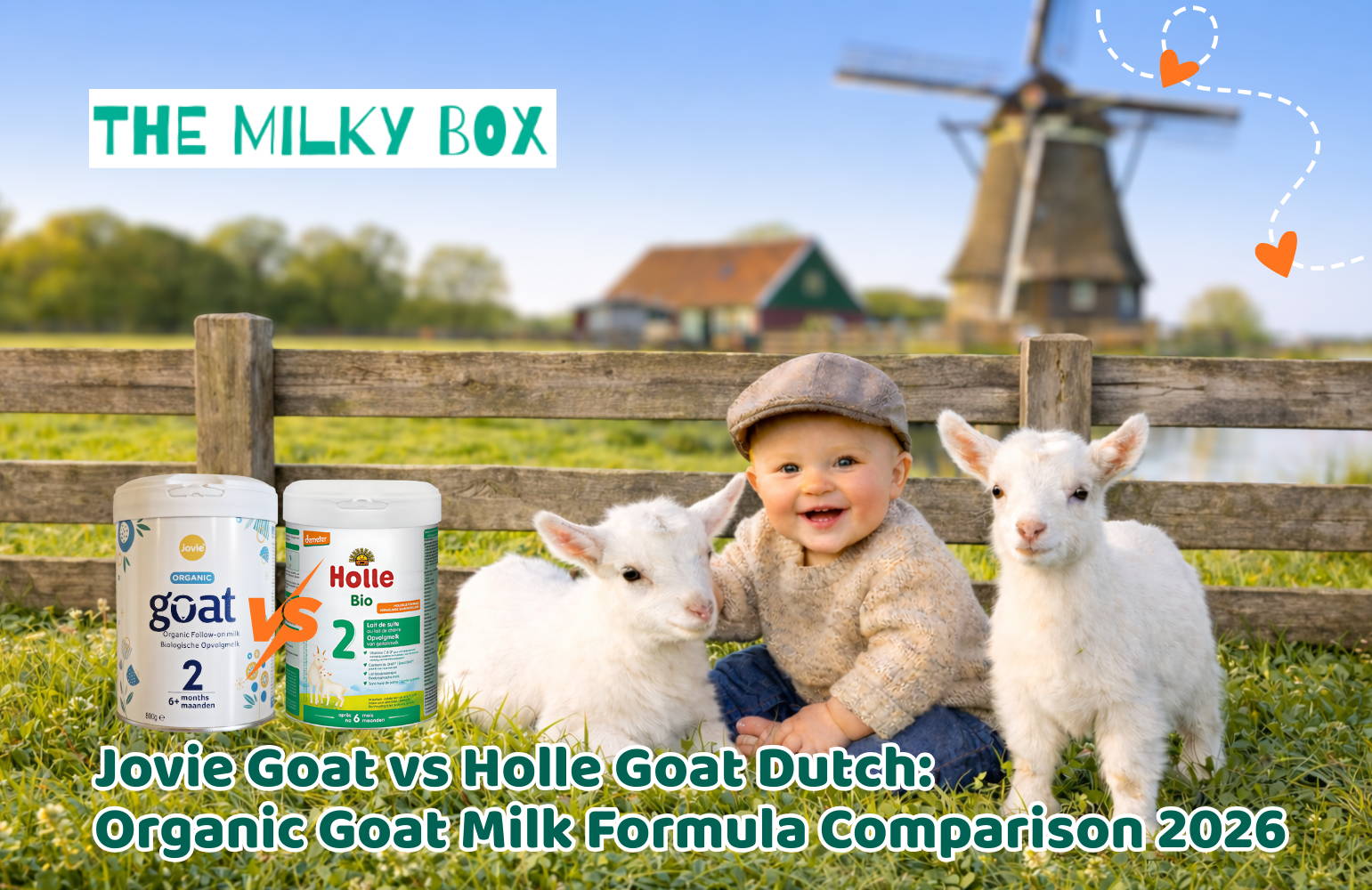
Two of the most popular organic goat milk formulas among US families are Jovie Goat and Holle Dutch Goat. Both are EU-certified organic, both use full-fat A2 goat milk, and both come in 800g cans covering three stages from birth through the toddler years.
But look past the surface similarities and the formulas tell very different stories — in what they add, what they leave out, and what that means for your baby's daily nutrition. This guide breaks down every difference so you can make the right call for your family.
As always, consult your pediatrician before starting or switching any formula.
Table of Contents:
6. Carbohydrates: The Biggest Difference
12. Which Formula Fits Your Family?
13. What About Holle Goat German?
14. FAQs
Quick Summary

Both formulas are premium organic goat milk options made with European organic goat milk. Here is where they differ:
Jovie Goat keeps the formula closer to breast milk composition: lactose is the only carbohydrate (no maltodextrin, no starch), GOS prebiotics are included in every stage, and both DHA and AA fatty acids are present for brain and eye development. Jovie also carries halal, kosher, and Glyphosate Residue Free certifications — making it one of the most broadly certified goat milk formulas available.

Holle Goat Dutch adds maltodextrin and starch alongside lactose, sources DHA from algal oil (plant-based, but without AA), and does not include supplemental prebiotics. Holle's standout credential is its Demeter biodynamic certification — the most prestigious organic farming standard in Europe.
The bottom line: Holle's strength is in how its milk is farmed. Jovie's strength is in what actually ends up inside the can.
Brand Origin

Jovie was founded in 2017 by a Dutch group dedicated to goat milk infant nutrition - a team with deep experience in the European goat milk formula industry. Jovie set out to build a cleaner formula from scratch — one centered on full-fat organic goat milk with no palm oil, no coconut oil, and no maltodextrin. Jovie formulas are produced in specialized, certified facilities in the Netherlands and Austria.
Holle is a Swiss company that has been producing organic baby food since 1933 — over 90 years. Holle was the first manufacturer in the world to produce Demeter-certified baby food and has built its reputation around biodynamic farming principles. The Holle Goat Dutch range is produced under Demeter biodynamic standards using European organic goat milk.
Both are serious, quality-focused companies. The difference in philosophy shows up in the formula: Jovie prioritizes a minimal, breast-milk-aligned ingredient list. Holle prioritizes farming certification and heritage.
Certifications

Jovie Carries
EU organic certification (NL-BIO-01, minimum 98% organic ingredients)
Halal certification
Kosher certification
Glyphosate Residue Free certification
FSSC 22000 food safety management certification
Holle Goat Dutch Carries
EU organic certification
Demeter biodynamic certification (99% organic, highest farming standard in the world)
Demeter is genuinely impressive from a farming and environmental perspective — it treats the farm as a self-sustaining ecosystem with strict animal welfare standards, including no dehorning. However, Demeter certifies the farming practice, not the finished formula. It does not address religious dietary compliance or herbicide residue testing in the final product.
Jovie's halal and kosher certifications are independently verified through its manufacturing partner (Buisman Zwolle in the Netherlands) [Note: Halal and kosher certification can vary by production batch and facility. We recommend contacting our customer support team at hello@themilkybox.com to confirm that the current batch in stock carries the certification your family requires.] Holle's infant formula range does not carry halal or kosher certification — an important distinction for families where religious dietary compliance is non-negotiable.
For a full breakdown of how organic certifications compare, read our best organic baby formula guide.
Milk Source and Protein
This is where the two formulas are most similar. Both use whole European organic goat milk as their primary ingredient. Both deliver A2 beta-casein protein, which is naturally easier to digest than the A1 beta-casein found in most cow milk. A2 protein does not produce the inflammatory peptide BCM-7 during digestion, which is why goat milk formula is often the first step families take when their baby shows discomfort on cow milk.
Both formulas produce smaller, softer curds in the stomach than cow milk, both are rich in medium-chain triglycerides (MCTs) for efficient fat absorption, and both contain naturally occurring oligosaccharides that are structurally similar to human milk oligosaccharides.
On protein and milk quality, these two formulas are essentially equal. The differences that matter are in what surrounds the milk — the carbohydrates, fats, DHA sources, and supplemental ingredients.
For more on why goat milk is gentler on sensitive stomachs, read our best goat milk formula guide.
Oils and Fats
Both formulas use organic sunflower oil and organic rapeseed oil alongside the natural goat milk fats. Neither uses palm oil or coconut oil — avoiding the calcium absorption and stool issues that palm oil can cause in infant formula.
The difference is proportion. Jovie's commitment to full-fat goat milk as the primary ingredient means the natural milk fats carry a larger share of the total fat profile, requiring less vegetable oil overall. This results in a shorter, cleaner ingredient list.
Holle Dutch Goat also starts with full cream goat milk powder but leans slightly more on the sunflower and rapeseed oils to meet its fatty acid targets.
Both formulas avoid the oils parents most commonly want to avoid. Jovie takes it a step further by also excluding coconut oil, which some parents prefer to avoid due to its high saturated fat content.
For more on oils in formula, see our guide to oils in baby formula.
Carbohydrates: The Biggest Difference

This is the section that separates the two formulas most clearly — and where Jovie has a meaningful edge for parents who want the closest match to breast milk.
Jovie uses organic lactose as its only carbohydrate source. No maltodextrin. No starch. No corn-derived anything. Lactose is the primary carbohydrate in breast milk, and Jovie's decision to keep it as the sole carbohydrate source means the energy profile of the formula mirrors breast milk more closely than any goat formula that adds fillers.
Holle Dutch Goat uses organic lactose as the primary carbohydrate but adds organic maltodextrin in every stage and organic starch in later stages. Maltodextrin is a complex carbohydrate derived from corn or potato starch. It thickens the formula, adds creaminess, and helps babies feel fuller. It is not harmful — but it does move the formula's carbohydrate profile further from breast milk's natural composition.
For parents who want the simplest, most breast-milk-aligned carbohydrate profile, Jovie is the clear winner in this category.
For more on carbohydrates and sugars in baby formula, see our guide on sugar in baby formula.
DHA and Fatty Acids
Both formulas include DHA for brain and eye development, but the source and scope differ.
Jovie includes both DHA (omega-3) and AA (omega-6). Research suggests that DHA and AA together produce better cognitive development outcomes than DHA alone — which is one reason breast milk naturally contains both. Most European formulas include only DHA. Jovie is one of the few organic goat milk formulas that adds AA alongside it, bringing the fatty acid profile closer to breast milk.
Jovie sources both from fish oil. The fish oil is listed as an allergen on the packaging, which is worth noting for families with fish allergies.
Holle Dutch Goat includes DHA from algal oil — a plant-derived source. This is a genuine advantage for families who avoid fish-derived ingredients entirely. However, Holle does not include AA, meaning one of the two key fatty acids for brain development is absent from the formula.
If avoiding fish is essential, Holle wins on DHA source. If you want both DHA and AA — matching the breast milk profile — Jovie delivers what Holle does not.
Prebiotics and Gut Health

Jovie adds GOS (galactooligosaccharides) prebiotics to every stage. GOS feeds the beneficial bacteria in your baby's gut and supports healthy digestion, immune development, and stool regularity — particularly valuable in the first year when the gut microbiome is still being established.
Holle Dutch Goat does not add supplemental prebiotics. It relies on the naturally occurring oligosaccharides in the goat milk itself.
Both goat milks naturally contain some prebiotic oligosaccharides, but Jovie's added GOS provides a measurable boost. For babies who have struggled with digestive irregularity, gas, or constipation, this added prebiotic support can make a noticeable difference.
For more on how prebiotics support infant digestion, read our probiotics for infants guide.
Stages and Age Coverage

Both formulas cover the same three stages:
Jovie Goat:
Jovie Goat Stage 1 (0–6 months) — infant formula from birth
Jovie Goat Stage 2 (6+ months) — follow-on formula with increased iron
Jovie Goat Stage 3 (10+ months) — toddler milk with higher protein
Holle Goat Dutch
Holle Goat Dutch Stage 1 (0–6 months) — infant formula from birth
Holle Goat Dutch Stage 2 (6+ months) — follow-on formula with added iron and maltodextrin
Holle Goat Dutch Stage 3 (10+ months) — toddler formula with added starch
Identical stage structure. No advantage to either brand here. Both transition smoothly from birth through toddlerhood with age-appropriate nutrient adjustments at each step.
For preparation instructions across all stages, visit our formula prep guide. For guidance on when to move between stages, our toddler formula guide covers what to look for after 12 months.
Taste and Preparation

Parents report that both formulas have a mild, creamy taste without the "goaty" flavor many worry about. Both dissolve well at the recommended water temperature and come with a scoop included.
Jovie has a slightly thinner, cleaner consistency — the natural result of not adding maltodextrin or starch. Many parents find this consistency closer to breast milk, which can help with the transition from breastfeeding.
Holle Dutch Goat is slightly thicker and creamier due to the maltodextrin. Some parents find the thicker texture keeps their baby more satisfied between feeds, particularly in later stages.
Neither formula has a strong or off-putting taste. Acceptance tends to be high for both
Packaging and Cost
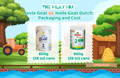
Both come in 800g (28 oz) cans — a direct apples-to-apples comparison. Pricing is similar and depends on bundle sizes and current promotions.
Both are available through The Milky Box with all-inclusive pricing for US customers — import duties, customs paperwork, and tracked shipping are all covered. No surprise fees at delivery. See our shipping policy for delivery details.
Which Formula Fits Your Family?
Both Jovie and Holle Dutch Goat are among the best goat milk formulas in the world. But if you compare them feature by feature, Jovie leads in more categories that directly affect what your baby actually consumes.

Choose Jovie Goat If:
Lactose-only carbohydrates (no maltodextrin, no starch) — closest to breast milk
GOS prebiotics in every stage for digestive support
Both DHA and AA for brain and eye development — matching breast milk's fatty acid profile
Halal and kosher certified — essential for families with religious dietary requirements [Note: Halal and kosher certification can vary by production batch and facility. We recommend contacting our customer support team at hello@themilkybox.com to confirm that the current batch in stock carries the certification your family requires.]
Glyphosate Residue Free certification — independently verified
Fewest added ingredients of any organic goat milk formula
Choose Holle Goat Dutch if:
Demeter biodynamic certification is your family's top priority
You need plant-based (algal) DHA and want to avoid all fish-derived ingredients
Your baby prefers a thicker, more filling formula consistency
You value 90+ years of brand heritage in organic infant nutrition
Not sure goat milk is right at all? If your baby has a confirmed cow's milk protein allergy (CMPA), goat milk may still trigger a reaction — the proteins are similar enough that cross-reactivity is common. For fully dairy-free options, explore Sprout Organic (plant-based, pea + rice protein) or Bébé M (hydrolyzed rice protein for confirmed allergies). Our best dairy- and soy-free formulas guide covers these in detail.
Compare all brands on our Baby Formula Comparison Chart.
What About Holle Goat German?

This article focuses on Holle Goat Dutch because it is the most direct comparison to Jovie — same country of milk origin, same can size, same stage count.
Holle also offers a German version of its goat formula, which differs in a few ways: it comes in smaller 400g boxes, offers additional stages including a Stage PRE (for newborns) and Stage 4 (toddler milk from 12+ months), and sources milk from German farms. The ingredients are similar — maltodextrin and algal DHA are present in both versions.
If you specifically need a PRE stage or Stage 4, or prefer smaller packaging, the German version is worth considering.
Frequently Asked Questions
Is goat milk formula safe for newborns?
Can I switch between Jovie and Holle?
Yes. Both use A2 goat milk protein, so transitioning between them is generally smoother than switching between different protein types entirely. Introduce the new formula gradually over 5–7 days. Our switching formula guide walks through the process step by step.
Can my baby use goat milk formula if they react to cow milk?
Many babies who show mild sensitivity to cow milk — gas, fussiness, constipation, hard stools — do better on goat milk thanks to the A2 protein, smaller fat globules, and softer curd formation. However, goat milk still contains lactose and milk proteins. If your baby has a diagnosed CMPA, goat milk is not safe — you will need a dairy-free formulainstead.
Does either formula contain palm oil?
No. Neither Jovie nor Holle Dutch Goat uses palm oil. Both use organic sunflower and rapeseed oils alongside natural goat milk fats.
Is either formula halal or kosher certified?
Jovie is both halal and kosher certified through its manufacturing partner. Holle's infant formula range does not carry halal or kosher certification. If religious dietary compliance is a requirement for your family, Jovie is the only option of the two that meets this standard. [Note: Halal and kosher certification can vary by production batch and facility. We recommend contacting our customer support team at hello@themilkybox.com to confirm that the current batch in stock carries the certification your family requires.]
Which formula is better for reflux?
Neither is formulated as an anti-reflux formula. For diagnosed reflux requiring a thickened feed, consider Bébé M Anti-Reflux (plant-based) orHiPP Anti-Reflux (cow milk-based). For mild spit-up, both goat formulas are gentle enough for most babies. Holle's thicker consistency may help some babies retain feeds slightly better, but this is anecdotal. Talk to your pediatrician.
Are both available in the US?
Yes. Both ship to US addresses through The Milky Box with all-inclusive pricing, tracked delivery, and managed customs compliance.
Disclaimer:
Please be aware that this information is based on general trends in babies, and it is not medical advice. Your doctor should be your first source of information and advice when considering any changes to your child’s formula and when choosing your child’s formula. Always consult your pediatrician before making any decisions about your child’s diet or if you notice any changes in your child.
Breastfeeding is the best nutrition for your baby because breast milk provides your child with all the essential nutrients they need for growth and development. Please consult your pediatrician if your child requires supplemental feeding.

Suzanne Renee' is an accomplished professional with extensive expertise in the area of infant nutrition, dedicated to promoting the health and wellbeing of children. She started this journey as a foster parent. Suzanne has emerged as a strong proponent of the European baby formula and has become a full time writer of the subject. In her free time, she enjoys camping, hiking and going to church.
Read Next:

Reviewed by Dr. Eric Wood, ND, MA

Dr. Wood is a licensed naturopathic doctor, with a doctorate degree from the Canadian College of Naturopathic Medicine in Toronto, Canada. He received his post-graduation certification in Mind Body Medicine at Harvard University.
With 15 years of experience, Dr. Wood is an Associate Professor of Holistic Nutrition at the American College of Health Sciences in Portland, Oregon. Dr. Wood is an educator, clinician, author, media figure, consultant, and owns his own holistic (naturopathic) medical practice in Ft. Lauderdale, Florida. Dr. Wood is currently researching and drafting books on cancer and pediatrics.
Outside of the medical profession, Dr. Wood loves singing with the Miami Lyric Opera and is an avid musician in South Florida. He also loves spending time with his wife and kids.