






Vegan Baby Formula FAQ: Your Questions Answered (Part 1)


By: Suzanne Renee' - April 07, 2026 - 10 Minute Read

Vegan Baby Formula FAQ: Your Questions Answered (Part 1)


Our customer support team hears the same questions week after week from parents considering plant-based formula for the first time. Is it safe? Will my baby get enough nutrition? What about protein? What about DHA?


Rather than answer them one email at a time, we decided to put the most common ones in one place — reviewed by our medical team — so every parent has access to the same reliable information. This is Part 1. We will continue adding to this series as new questions come in.


As always, consult your pediatrician before making any changes to your baby's formula. Nothing here replaces professional medical advice.


Vegan Baby Formula FAQ: Your Questions Answered (Part 1)

Is vegan baby formula safe for my baby?

Is vegan baby formula safe for my baby?


Yes — provided the formula is regulated and labeled for infant use. Any infant formula legally sold must meet strict nutritional and safety standards that define minimum and maximum levels for energy, protein, essential fatty acids, vitamins, and minerals. These rules apply equally to dairy-based, goat milk-based, and plant-based formulas.


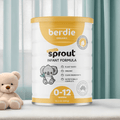
Sprout Organic Infant Formula is validated against the FSANZ (Food Standards Australia New Zealand) infant formula standard and was developed alongside pediatricians, accredited dietitians, and food scientists. It provides complete nutrition from birth to 12 months.


For a deeper look at how vegan formula compares to conventional options, read our 2026 Parent's Guide to Sprout Organic.

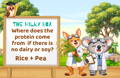
Where does the protein come from if there is no dairy or soy?

Where does the protein come from if there is no dairy or soy?


Sprout Organic uses a blend of organic fermented pea protein and organic fermented and sprouted rice protein. Pea protein is naturally rich in lysine, while rice protein provides methionine — together they deliver all nine essential amino acids without the need for hydrolysis or supplemental free amino acids.


This combination is why Sprout does not need to rely on soy (a common infant allergen) or dairy to achieve a complete amino acid profile. For the science behind how these two proteins complement each other, see our rice protein vs pea protein breakdown.

Does vegan formula contain DHA for brain development?

Does vegan formula contain DHA for brain development?


Yes. Sprout Organic includes algal DHA — an omega-3 fatty acid sourced from microalgae rather than fish oil. Algal DHA is the same type of docosahexaenoic acid that supports brain and eye development in infants; the difference is the source, not the nutrient itself.

This matters for families who want to avoid fish-derived ingredients entirely, whether for allergy reasons, ethical preferences, or both.

Is "plant-based" the same as "vegan"?

Is "plant-based" the same as "vegan"?

Not always. Some formulas marketed as plant-based still contain animal-derived vitamin D3 sourced from lanolin (sheep's wool). A certified vegan formula uses no animal-derived ingredients at all — including vitamins and minerals.


Sprout Organic is independently certified vegan by Vegan Australia, meaning every single ingredient has been verified as free from animal-derived components. It is also certified organic by Australian Certified Organic (ACO), carbon neutral, and halal certified.


For more on why this distinction matters, read why parents are choosing plant-based baby formula in 2026.

Can I use vegan formula if my baby has a cow's milk protein allergy (CMPA)?

Can I use vegan formula if my baby has a cow's milk protein allergy (CMPA)?

It depends on the severity. Sprout Organic is completely dairy-free and soy-free, which means it removes the two most common formula allergens entirely. For babies with mild to moderate sensitivities who are not thriving on standard formula, Sprout can be a suitable option — under your pediatrician's guidance.


For babies with a confirmed, diagnosed CMPA who require a medical-grade formula, hydrolyzed options like Bébé M may be more appropriate. The protein in Bébé M is broken down (hydrolyzed) into smaller peptides, which are specifically designed for allergy management. We cover this in detail in our Sprout Organic vs Bébé M comparison.


Always work with your pediatrician when allergies are involved.

What age range does Sprout cover?

What age range does Sprout cover?


Sprout Organic offers two formula stages plus two nutrition shakes:


Choosing the right stage matters. Infant formulas and toddler drinks are formulated differently, and using the wrong one means your child may not be getting the right nutrient balance. Our toddler formula guide covers what to look for when transitioning after 12 months.

How do I switch my baby to a plant-based formula?

How do I switch my baby to a plant-based formula?


Introduce the new formula gradually over 5 to 7 days. Start by mixing a small amount of the new formula with the current one, then slowly increase the ratio each day. This gives your baby's digestive system time to adjust.


During the transition, watch for changes in stool consistency, gas levels, feeding comfort, and overall mood. Some adjustment is normal. If symptoms persist beyond a week or if you notice anything concerning, talk to your pediatrician.


For step-by-step guidance, our switching formula guide and our formula prep guide cover everything from mixing ratios to water temperature.


Have more questions? This is Part 1 — we will keep adding to this series based on what our customers ask. If there is something we did not cover, reach out to our team at hello@themilkybox.com and your question might make it into Part 2.


You can browse the full Sprout Organic collection or explore all formulas at The Milky Box.


 Australian organic, complete plant-based nutrition

Disclaimer:

Please be aware that this information is based on general trends in babies, and it is not medical advice. Your doctor should be your first source of information and advice when considering any changes to your child’s formula and when choosing your child’s formula. Always consult your pediatrician before making any decisions about your child’s diet or if you notice any changes in your child.


Breastfeeding is the best nutrition for your baby because breast milk provides your child with all the essential nutrients they need for growth and development. Please consult your pediatrician if your child requires supplemental feeding.


Suzanne Renee' is an accomplished professional with extensive expertise in the area of infant nutrition, dedicated to promoting the health and wellbeing of children. She started this journey as a foster parent. Suzanne has emerged as a strong proponent of the European baby formula and has become a full time writer of the subject. In her free time, she enjoys camping, hiking and going to church.

Leave a Comment:

Comments will be approved before showing up.

Name:

Email:

Comment:

Read Next:


Reviewed by Suzanne Renee',

Infant Nutrition Expert

Suzanne Renee' is an accomplished professional with extensive expertise in the area of infant nutrition, dedicated to promoting the health and wellbeing of children. She started this journey as a foster parent.


Suzanne has emerged as a strong proponent of the European baby formula and has become a full-time writer on the subject. 


In her free time, she enjoys camping, hiking, and going to church.