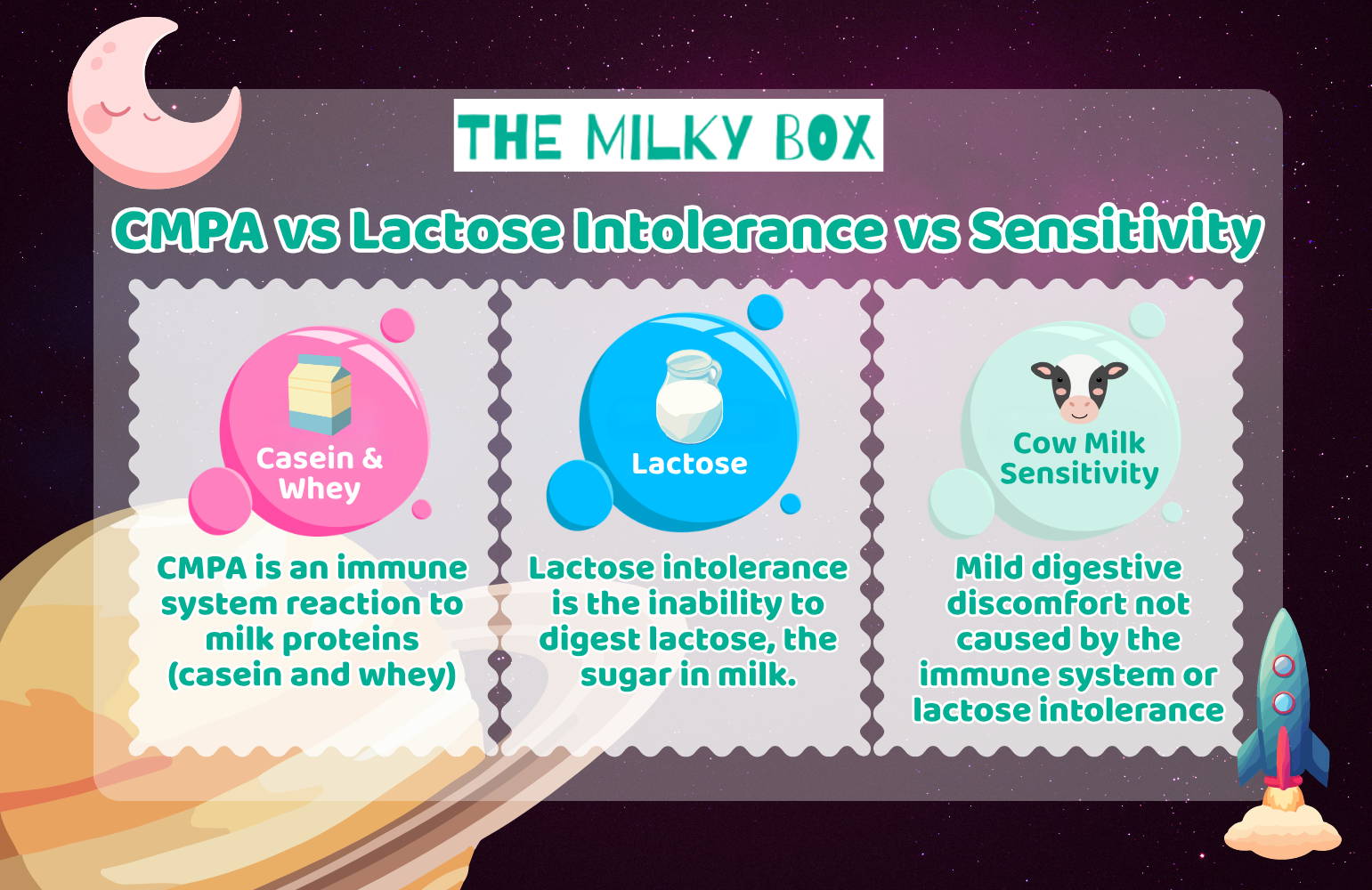
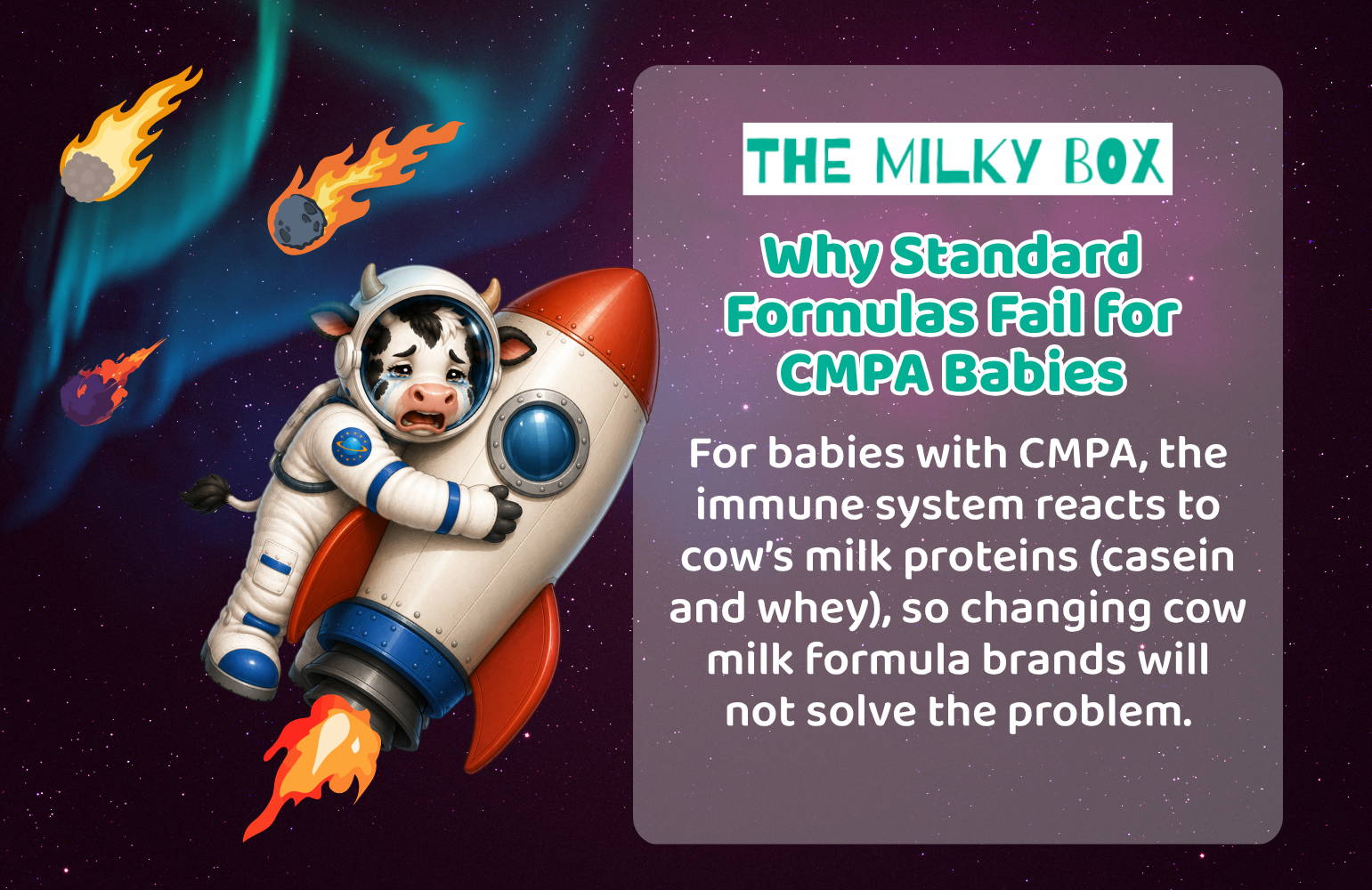
Cow's milk protein allergy is an immune system reaction to one or more of the proteins found in cow's milk. The two main proteins involved are casein (the curd-forming protein) and Whey (the watery portion). For babies with CMPA, the immune system identifies these proteins as a threat and mounts a response.
CMPA comes in two main forms:
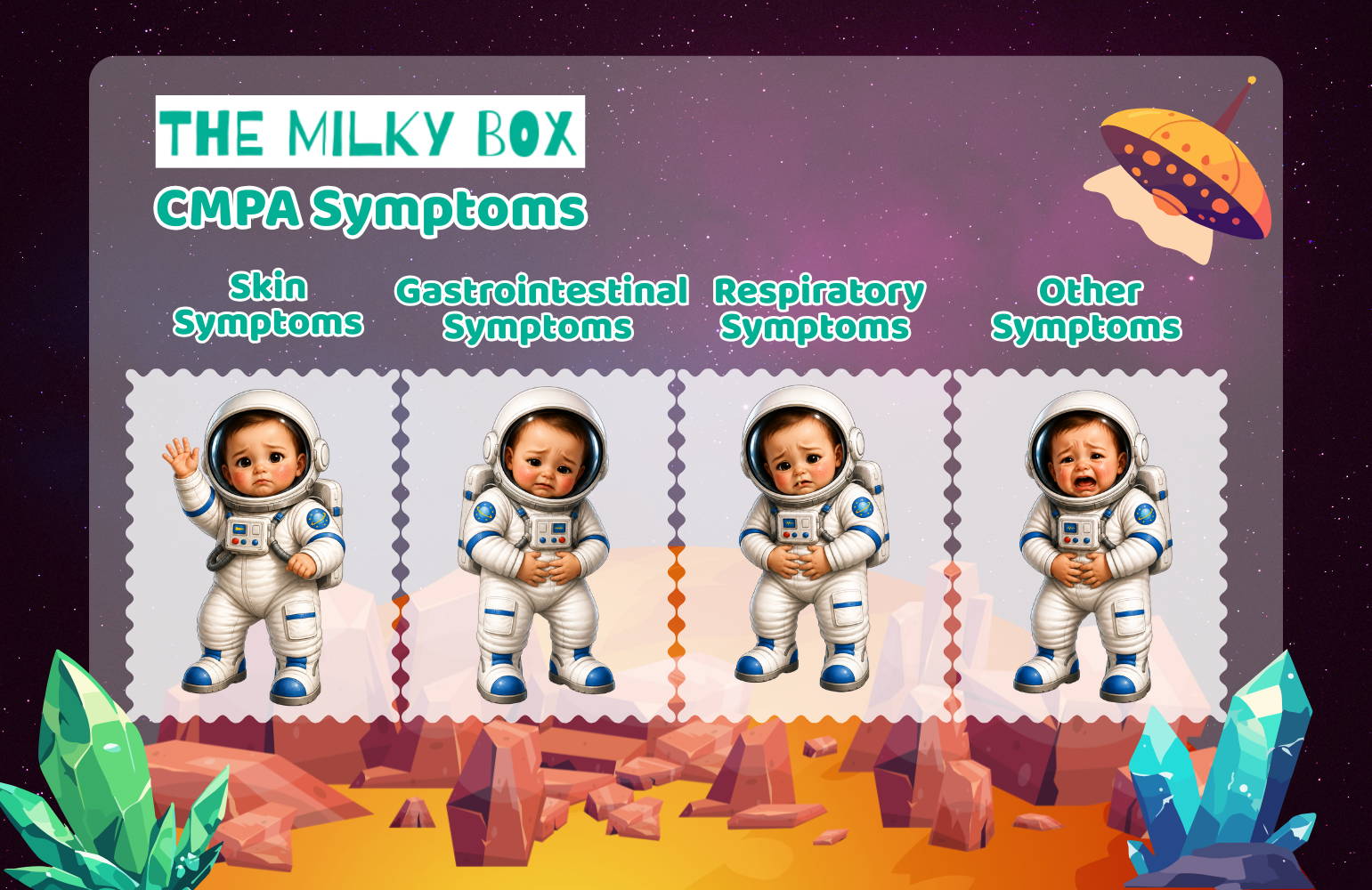
IgE-mediated CMPA involves a classic immune reaction. Symptoms appear quickly — usually within minutes to two hours of feeding. This is the form most parents picture when they hear "allergy": hives, swelling, vomiting, and in rare severe cases, anaphylaxis.
IgE-mediated CMPA is delayed and harder to recognize. Symptoms can appear hours or even days after exposure. They are more often gastrointestinal — chronic diarrhea, blood or mucus in stool, severe reflux, eczema flares, poor growth, persistent crying — and overlap with many other infant conditions, which is why diagnosis is often delayed.
Both forms are real allergies. Both require avoiding cow's milk protein. The difference is mainly in how the reaction presents and how it is diagnosed.
For an introduction to dairy-free options before getting into the specifics of CMPA, our best dairy- and soy-free formulas guide covers the landscape.