


Yes — provided the formula is labeled for use from birth (Stage 1). Both Jovie Goat Stage 1 and HiPP Dutch Goat Stage 1 are designed for infants from birth. Always confirm with your pediatrician before starting any formula.
Jovie Goat vs HiPP Dutch Goat:
Organic Goat Milk Formula Comparison 2026
By: Suzanne Renee' - April 17, 2026 - 15 Minute Read
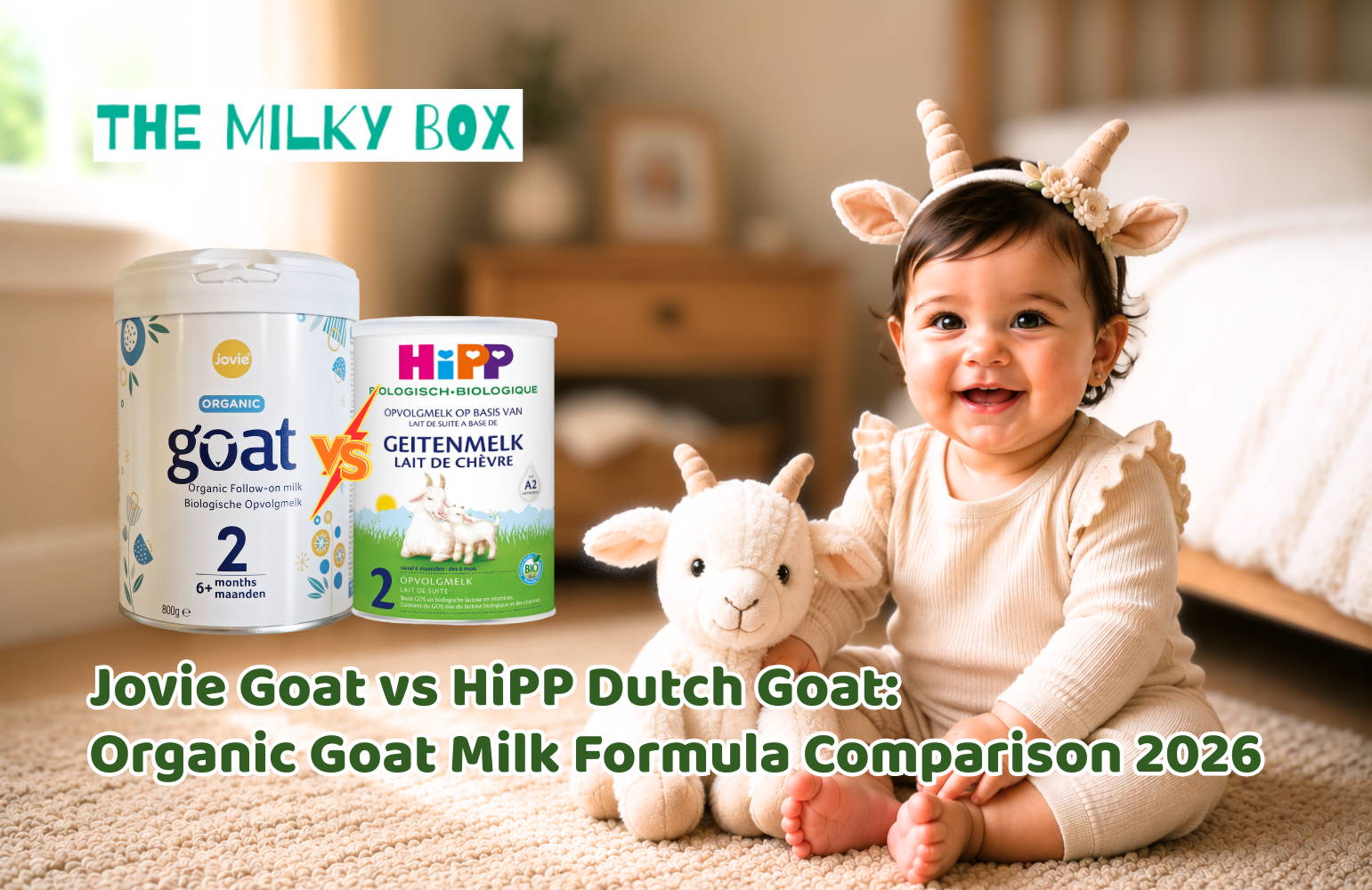
If you have decided that organic goat milk formula is the right path for your baby, two names will dominate your shortlist: Jovie and HiPP Dutch Goat. Both are EU-certified organic. Both use A2 goat milk. Both are widely trusted by US families importing premium European nutrition.
But these are not the same formula. Jovie and HiPP take genuinely different approaches — to the milk itself (full-fat vs skimmed), to the oil profile (palm oil-free vs palm oil included), to gut health (prebiotics only vs prebiotics + probiotics), and to folate delivery (standard vs Metafolin). The right choice depends on what your family prioritizes.
This guide breaks down every meaningful difference so you can make the call with confidence. As always, consult your pediatrician before starting or switching formulas.
Table of Contents:
3. Certifications and Safety Testing
4. Milk Source: Full-Fat vs Skimmed
10. Taste, Preparation, and Cost
11. Which Formula Fits Your Family?
12. FAQs
Quick Summary
Both formulas are premium organic goat milk options designed to deliver gentle, complete nutrition for babies who do not do well on conventional cow milk formula. Here is what actually separates them:

Jovie Goat uses full-fat organic goat milk as the number one ingredient. This minimal-processing approach means no palm oil, no coconut oil, and no maltodextrin. The carbohydrate is lactose only. The formula adds GOS prebiotics (no probiotic) and includes both DHA and AA from fish oil. Comes in 800g cans.

HiPP Dutch Goat uses organic skimmed goat milk and whey protein, supplemented with a vegetable oil blend that includes palm oil, rapeseed oil, and sunflower oil. The carbohydrate is lactose only. The formula adds GOS prebiotics plus a probiotic (Lactobacillus fermentum CECT5716, derived from breast milk research) and Metafolin — a bioavailable form of folate that mirrors what is naturally found in breast milk. DHA from fish oil, ARA from Mortierella alpina oil. Comes in 400g cans.
The simplest way to think about the trade-off: Jovie offers a cleaner, more minimal ingredient profile with full-fat milk doing most of the work. HiPP Dutch Goat offers more functional ingredients (probiotics, Metafolin, ARA from a non-fish source) but at the cost of including palm oil and using skimmed milk.
Jovie Goat vs. HiPP Dutch Goat Brand Origin

Jovie is part of Unica Global, a Dutch group dedicated to goat milk infant nutrition. Founded in 2017 by a team with deep experience in the European goat milk formula industry, Jovie's mission was to build a cleaner formula from scratch — one centered on full-fat organic goat milk, with no palm oil, no coconut oil, and no maltodextrin. Jovie products are produced in specialized, certified facilities in the Netherlands and Austria
HiPP is a German family-owned company founded in 1899 that has been producing organic baby food for over 60 years. HiPP is one of the largest and most established organic baby food brands in the world, operating manufacturing facilities in Austria, Hungary, and Germany. HiPP is carbon neutral across all manufacturing facilities and recycles 97% of factory waste — putting it among the most sustainability-focused infant formula manufacturers globally.
The HiPP Dutch Goat formula is manufactured in Germany and packaged for the Dutch market, which means it carries the HiPP Combiotic philosophy (prebiotics + probiotics) while meeting EU organic standards. Browse HiPP's full range in our HiPP formula collection.
Both brands have strong reputations and decades of experience between them. The difference shows up in formulation philosophy.
Certifications and Safety Testing

Both formulas carry EU organic certification (minimum 95% organic ingredients). Both are GMO-free and free from artificial colors, flavors, and preservatives.
Jovie Carries
EU organic certification (NL-BIO-01, minimum 98% organic ingredients)
Halal certification
Kosher certification
Glyphosate Residue Free certification
FSSC 22000 food safety management certification
Both formulas carry EU organic certification (minimum 95% organic ingredients). Both are GMO-free and free from artificial colors, flavors, and preservatives.
[Note: Halal and kosher certification can vary by production batch and facility. We recommend contacting our customer support team at hello@themilkybox.com to confirm that the current batch in stock carries the certification your family requires.]
HiPP Dutch Goat Carries
EU organic certification
Carbon neutral manufacturing certification
A notable additional point in HiPP's favor: in March 2025, Consumer Reports tested HiPP Dutch formulas and gave them perfect safety scores across all categories, including absence of heavy metals and harmful chemicals. This is meaningful third-party validation that goes beyond standard regulatory compliance.
If religious dietary compliance (halal, kosher) is a requirement for your family, Jovie has the edge. If independently tested third-party safety validation matters most, HiPP Dutch Goat has documented Consumer Reports testing on its side.
Milk Source: Full-Fat vs Skimmed

This is the foundational difference between the two formulas.
Jovie Goat uses full-fat organic goat milk powder as its number one ingredient. This means the natural fats from goat milk — including its naturally occurring medium-chain triglycerides (MCTs) — are preserved in the formula. Full-fat milk delivers more of the fat profile that babies actually need without requiring as much supplementation from vegetable oils.
HiPP Dutch Goat uses organic skimmed goat combined with organic whey protein. Skimming removes most of the natural milk fat. To compensate, HiPP relies more heavily on its vegetable oil blend (palm oil, rapeseed oil, sunflower oil) to deliver the required fatty acid profile.
Why does this matter? Full-fat milk preserves more of goat milk's natural composition, including naturally occurring oligosaccharides and the natural fat globule structure that contributes to gentler digestion. Skimmed-milk-based formulas can still deliver complete nutrition, but they lean more on synthetic supplementation to match what nature provides in whole milk.
If you specifically want a full-fat goat milk formula, Jovie is one of the few brands on the market that actually delivers it. Most goat milk formulas — including HiPP — use skimmed milk as the base.
The Palm Oil Question
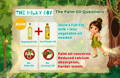
This is one of the clearest practical differences.
Jovie Goat does not use palm oil. It also skips coconut oil. The formula uses only organic sunflower oil and organic rapeseed oil as supplemental fats, and because the full-fat goat milk base carries more of the fat profile, less vegetable oil is needed overall.
HiPP Dutch Goat does use palm oil. Palm oil appears in HiPP's vegetable oil blend alongside rapeseed and sunflower oils.
Palm oil in baby formula is controversial. It is widely used because it provides palmitic acid — a fatty acid found naturally in breast milk. However, the form of palmitic acid in palm oil (sn-1,3 position) is less efficiently absorbed by infants than the form found in breast milk (sn-2 position). This can lead to reduced calcium absorption and harder, less comfortable stools.
To be fair to HiPP: the brand uses organic palm oil from sustainable sources, and the blend with rapeseed and sunflower oils means palm oil is not the dominant fat source. Many parents use HiPP without any noticeable issue. But for parents who specifically want to avoid palm oil entirely, Jovie is the clear choice.
For more on why oil matters in baby formula, read our guide to oils in baby formula.
Carbohydrates

Good news for both formulas here: Lactose is the only carbohydrate in both. Neither uses corn syrup, maltodextrin, starch, or any other supplemental carbohydrate. This mirrors breast milk, where lactose is the natural primary carbohydrate.
This is one area where Jovie and HiPP Dutch Goat are essentially equal. Both deliver a clean, lactose-only carbohydrate profile that is gentle on infant digestion and aligns closely with breast milk composition.
For more on carbohydrates and sugars in baby formula, see our guide on sugar in baby formula.
Prebiotics and Probiotics
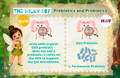
Both formulas support gut health, but they take different approaches.
Jovie adds organic GOS (galacto-oligosaccharides) prebiotics to every stage. GOS feeds the beneficial bacteria already present in your baby's gut. Jovie does not add a probiotic — it relies on the GOS to support the gut microbiome.
HiPP Dutch Goat uses HiPP's signature Combiotic approach: GOS prebiotics PLUS a probiotic culture (Limosilactobacillus fermentum CECT5716, also called L. fermentum hereditum). This specific probiotic strain was originally isolated from breast milk and has been studied for its role in supporting infant gut health and immune function. HiPP is one of the few major formula brands that includes a clinically researched probiotic strain in its standard formula.
If clinically researched probiotic supplementation matters to you — particularly if your baby has dealt with digestive irregularity or you want the closest possible match to breast milk's gut-supporting components — HiPP Dutch Goat has the more comprehensive approach. If you prefer a simpler, prebiotic-only formula, Jovie delivers that cleanly.
For more on probiotics and gut health, read our probiotics for infants guide.
DHA, AA, and Folate

Three smaller-but-meaningful differences here.
DHA source: Both formulas source DHA from fish oil. Equal on this point.
AA (arachidonic acid) source: Jovie sources both DHA and AA from fish oil. HiPP Dutch Goat sources DHA from fish oil but sources AA (also called ARA) from Mortierella alpina oil — a fungal oil. For families avoiding fish-derived ingredients beyond just DHA, HiPP's split sourcing means some of the omega-6 supplementation is fish-free. Note: both formulas still contain fish oil for DHA, so neither is suitable for fish allergies.
Folate source: This is HiPP's standout addition. HiPP Dutch Goat includes Metafolinonly (calcium-L-methylfolate), a bioavailable form of folate that mimics the natural folate found in breast milk. Standard formulas use folic acid, which the body must convert to its active form before use. Metafolin is already in the active form, meaning it is more readily absorbed — particularly beneficial for babies and mothers with the MTHFR gene variant that affects folate metabolism. Jovie uses standard folic acid.
If folate absorption is a priority — especially if there is a family history of MTHFR-related issues — HiPP Dutch Goat has a clinically relevant edge here.
Stages and Packaging
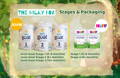
Jovie Goat is available in three stages, all in 800g cans:
Jovie Goat Stage 1 (0–6 months) — infant formula from birth
Jovie Goat Stage 2 (6+ months) — follow-on formula with increased iron
Jovie Goat Stage 3 (10+ months) — toddler milk with higher protein
HiPP Dutch Goat is available in two main stages, in 400g cans:
Jovie's larger 800g cans mean more formula per purchase and fewer reorders. HiPP's smaller 400g cans mean fresher formula per opening, especially if you are supplementing with breast milk or your baby drinks less per day.
For guidance on when to transition between stages, see our toddler formula guide.
Taste, Preparation, and Cost

Both formulas dissolve well at the recommended water temperature (HiPP recommends boiling water and cooling for no longer than 30 minutes; Jovie recommends mixing at approximately 40°C). Both come with a scoop included. Both have a mild, creamy taste typical of well-made goat milk formulas.
Jovie Goat has a slightly thinner consistency due to the absence of palm oil's thickening effect. Some parents find this consistency closer to breast milk.
HiPP Dutch Goat has a slightly creamier consistency, partly due to the palm oil in the vegetable blend. The flavor is mild — many parents report easy acceptance, though every baby is different.
On cost: per gram, the two are roughly comparable, though specific pricing depends on bundle sizes and current promotions. Jovie's 800g cans typically work out to a similar per-serve cost as HiPP's 400g cans when you account for volume.
Both are available through The Milky Box with all-inclusive pricing — import duties, customs paperwork, and tracked shipping covered. See our shipping policy for delivery details. For step-by-step preparation, our formula prep guide covers both brands.
Which Formula Fits Your Family?

Both formulas are excellent. The right one depends on your priorities.
Choose Jovie Goat if:
You want a palm oil-free and coconut oil-free formula
Full-fat goat milk as the primary ingredient is important to you
A minimal, clean ingredient list matters more than added functional ingredients
Halal and kosher certified — essential for families with religious dietary requirements [Note: Halal and kosher certification can vary by production batch and facility. We recommend contacting our customer support team at hello@themilkybox.com to confirm that the current batch in stock carries the certification your family requires.]
You prefer larger 800g cans and fewer reorders
You want both DHA and AA delivered together (from fish oil)
Choose HiPP Dutch Goat if:
You want a clinically researched probiotic (L. fermentum CECT5716) included in the formula
Metafolin(bioavailable folate) matters to your family — especially if there is MTHFRgene variant history
You want ARA from a non-fish source (Mortierella alpina oil)
You value HiPP's 60+ years of organic infant nutrition expertise
You want the additional safety validation of Consumer Reports testing
You prefer smaller 400g cans for freshness
Not sure goat milk is right at all? If your baby has a confirmed cow's milk protein allergy (CMPA), goat milk may still cause a reaction — the proteins are similar. Explore Sprout Organic (plant-based, pea + rice protein) or Bébé M (hydrolyzed rice protein). Our best dairy- and soy-free formulas guide covers these in detail.
For broader brand comparisons, our Jovie Goat vs Holle Goat Dutch comparison covers another major Dutch goat option.
Frequently Asked Questions
Is goat milk formula safe for newborns?
Can I switch between Jovie Goat and HiPP Dutch Goat?
Yes. Both use A2 goat milk protein, so the protein transition is generally smooth. The main changes your baby will experience are in the supporting ingredients — Jovie does not contain palm oil or a probiotic; HiPP does include both. Use a 7-day gradual transition. Our switching formula guide walks through the process. You can also see our step-by-step Jovie switching guide for additional detail.
Does either formula contain palm oil?
Jovie Goat does not contain palm oil. HiPP Dutch Goat does contain organic palm oil as part of its vegetable oil blend.
Is either formula suitable for babies with cow's milk protein allergy (CMPA)?
No. Neither formula is appropriate for babies with diagnosed CMPA. Goat milk proteins share enough structural similarity with cow milk proteins that cross-reactivity is common. Babies with confirmed CMPA need a fully dairy-free formula like Sprout Organic or Bébé M.
What is Metafolin and why does HiPP include it?
Metafolin is a registered trademark for calcium-L-methylfolate — the active, bioavailable form of folate (vitamin B9). Standard formulas use folic acid, which the body has to convert into the active form before use. Metafolin is already in the active form, meaning it is more readily absorbed by the body. This is particularly beneficial for individuals with the MTHFR gene variant, which affects folate metabolism. Metafolin mirrors the natural form of folate found in breast milk.
Can my baby use goat milk formula if they were sensitive to cow milk?
Many babies with mild sensitivity to cow milk formula — gas, fussiness, constipation — do better on goat milk because of A2 protein, smaller fat globules, and softer curd formation. However, sensitivity is different from allergy. If your baby has confirmed CMPA, goat milk is not safe. If unsure, talk to your pediatrician.
Are both available in the US?
Yes. Both ship to US addresses through The Milky Box with all-inclusive pricing, tracked delivery, and managed customs compliance.
Disclaimer:
Please be aware that this information is based on general trends in babies, and it is not medical advice. Your doctor should be your first source of information and advice when considering any changes to your child’s formula and when choosing your child’s formula. Always consult your pediatrician before making any decisions about your child’s diet or if you notice any changes in your child.
Breastfeeding is the best nutrition for your baby because breast milk provides your child with all the essential nutrients they need for growth and development. Please consult your pediatrician if your child requires supplemental feeding.

Suzanne Renee' is an accomplished professional with extensive expertise in the area of infant nutrition, dedicated to promoting the health and wellbeing of children. She started this journey as a foster parent. Suzanne has emerged as a strong proponent of the European baby formula and has become a full time writer of the subject. In her free time, she enjoys camping, hiking and going to church.
Read Next:

Reviewed by Dr. Eric Wood, ND, MA

Dr. Wood is a licensed naturopathic doctor, with a doctorate degree from the Canadian College of Naturopathic Medicine in Toronto, Canada. He received his post-graduation certification in Mind Body Medicine at Harvard University.
With 15 years of experience, Dr. Wood is an Associate Professor of Holistic Nutrition at the American College of Health Sciences in Portland, Oregon. Dr. Wood is an educator, clinician, author, media figure, consultant, and owns his own holistic (naturopathic) medical practice in Ft. Lauderdale, Florida. Dr. Wood is currently researching and drafting books on cancer and pediatrics.
Outside of the medical profession, Dr. Wood loves singing with the Miami Lyric Opera and is an avid musician in South Florida. He also loves spending time with his wife and kids.