Baby Formula and Iron: How Much Is Too Much, How Much Is Too Little?


By: Suzanne Renee' - June 11, 2026 - 14 Minute Read

Baby Formula and Iron: How Much Is Too Much, How Much Is Too Little? | The Milky Box

Iron is one of those nutrients parents either worry about constantly or never think about — there is rarely a middle ground. And both extremes have a point. Iron deficiency is one of the most common nutritional concerns in infancy, with serious and sometimes irreversible consequences for brain development. But emerging research has also raised legitimate questions about whether some heavily iron-fortified formulas may deliver too much for healthy, already iron-replete babies.


So which is it? Is iron something to worry about or not? And what about the misconceptions — like the widespread belief that vegan or plant-based baby formulas cannot deliver enough iron? Or that goat milk formulas are iron-deficient compared to cow milk options?


This guide covers what the official guidelines say, what the science behind them actually shows, the meaningful differences between US and European iron fortification levels, the persistent myths about iron in plant-based and goat milk formulas, and how to think about iron in the context of your specific baby. As always, talk to your pediatrician before making any formula decisions or changes — iron levels in particular are something they will be monitoring through routine bloodwork.


The Iron Expedition:  Exploring Iron in Baby Formula | The Milky Box

Why Iron Matters for Babies

Why Iron Matters for Babies | The Milky Box


Iron is essential for almost every aspect of infant development. It is a core building block of hemoglobin (the protein in red blood cells that carries oxygen to every tissue in the body), it plays a critical role in brain development during the first 1,000 days of life, and it supports immune function, energy metabolism, and the formation of neurotransmitters that affect learning, attention, and behavior.


The first two years are when iron matters most. The brain is developing at a faster rate during this period than at any other point in life. Iron deficiency during this window has been linked to long-term effects on cognitive function, motor development, and behavior — and some of those effects can be irreversible even if iron levels are corrected later.


This is why pediatricians and regulatory bodies pay so much attention to iron in infant nutrition. It is not a "nice to have" — it is foundational. Every legally sold infant formula, regardless of brand or protein source, must deliver iron at levels its regulatory body has determined are adequate for healthy infant development.


How Much Iron Do Babies Actually Need?

How Much Iron Do Babies Actually Need? | The Milky Box


The American Academy of Pediatrics (AAP) has published clear guidelines on daily iron requirements at each age. These are the numbers that matter:


  • 0 to 6 months: Adequate Intake (AI) of 0.27 mg/day. Healthy full-term infants are born with iron stores that last 4 to 6 months, so daily needs during this window are very low. Breast milk and standard infant formula both meet this.

  • 6 to 12 months: Recommended Dietary Allowance (RDA) of 11 mg/day. This is when needs increase substantially as the iron stores from birth deplete and the baby's blood volume continues expanding. This is also when the AAP recommends introducing iron-rich complementary foods (red meat, iron-fortified cereals, beans, dark leafy greens).

  • 1 to 3 years (toddlers): RDA of 7 mg/day. Needs are lower again as growth rates slow and the diet becomes more varied.

  • Preterm infants: In At least 2 mg/kg of body weight per day through 12 months. Preterm babies are born with smaller iron stores and need supplementation from the start.

  • Breastfed term infants: Should receive1 mg/kg/day of supplemental iron starting at 4 months, until iron-rich complementary foods are introduced. Breast milk, while highly bioavailable, contains very little iron.


For formula-fed infants, the AAP states that iron needs through the first 12 months can be met by a standard iron-fortified formula containing 10–12 mg/L plus iron-containing complementary foods after 4 to 6 months.


For guidance on introducing solids alongside formula, our baby feeding chart covers what to introduce when.

Iron in Breast Milk vs Formula

Iron in Breast Milk vs Formula | The Milky Box


Here is one of the most important — and most misunderstood — facts about infant iron nutrition: breast milk contains very little iron, but the iron it contains is exceptionally well absorb.


Breast milk has approximately 0.3 mg of iron per liter . Infant formula typically has 8 to 14 mg per liter. On paper, that makes formula look 30 to 40 times richer in iron than breast milk. But absorption tells a very different story:

  • Iron bioavailability from breast milk: roughly 50% of the iron is absorbed and used by the infant.

  • Iron bioavailability from infant formula: roughly 10 to 12%.


This is why formulas are fortified with so much more iron than breast milk contains — to compensate for the lower absorption rate. The end result is that a formula-fed infant typically absorbs a similar amount of iron to a breastfed infant.


The reason for the bioavailability gap is partly the form of the iron (heme vs non-heme), partly the role of other components in breast milk like lactoferrin that affect iron metabolism, and partly differences in how the infant's gut processes the two.

The US vs Europe Iron Difference

The US vs Europe Iron Difference | The Milky Bx


This is one of the most meaningful regulatory differences between American and European infant formulas — and one of the main reasons many US parents choose imported European and Australian formulas through The Milky Box.

  • US AAP recommendation: 10–12 mg of iron per liter in infant formula. Most US-market formulas land in the 10–14 mg/L range.

  • EU infant formula regulations: typically 4 to 8 mg of iron per liter. European regulators take the view that lower iron concentrations are sufficient when paired with iron-rich complementary foods after 4–6 months, and that excessive iron in early infancy may carry risks.

This is not because European formulas are "iron deficient" — they meet their regulatory requirements and have decades of successful real-world use. It is because the two regions have reached different conclusions about the optimal balance between preventing iron deficiency and avoiding potential overexposure.


For more on broader regulatory differences between US and European formulas, see our best organic baby formula guide.

Signs of Iron Deficiency

Signs of Iron Deficiency | The Milky Box


Iron deficiency is the more common and well-established concern. The early stages can be subtle — and a baby can be iron-deficient for months before it becomes obvious. Things to watch for:


Behavioral and developmental signs:

  • Unusual tiredness or low energy

  • Pale skin (especially noticeable in the palms, gums, or inside the lower eyelid)

  • Reduced interest in feeding or solid foods

  • Slow weight gain or growth

  • Delayed motor milestones

  • Increased irritability or fussiness

Physical signs:

  • Pica (eating non-food items like dirt or ice — more common in older infants and toddlers)

  • Increased susceptibility to infections

  • Rapid heartbeat or breathing

  • Cold hands and feet

  • Delayed motor milestones

Risk factors that increase the likelihood of iron deficiency:

  • Preterm birth or low birth weight

  • Exclusive breastfeeding beyond 6 months without iron supplementation

  • Use of cow's milk as the primary drink before 12 months

  • Limited intake of iron-rich solid foods after 6 months

  • Family history of iron deficiency anemia


The AAP recommends universal screening for iron deficiency anemia at 12 months of age through a simple hemoglobin blood test. If your pediatrician suspects iron deficiency earlier, they may order this test sooner.

Can a Baby Get Too Much Iron?

Can a Baby Get Too Much Iron? | The Milky Box


This is where the science gets more nuanced. The short answer: for most babies, no — excess iron from a properly formulated infant formula is not a meaningful concern. But emerging research has raised legitimate questions about high iron levels for already iron-sufficient infants.


The Lancet Child & Adolescent Health 2017 Viewpoint examined this question, noting that as iron deficiency rates have decreased in high-income countries, concerns have grown that current iron fortification levels may exceed what is needed to prevent deficiency.


The most-cited evidence comes from a Chilean randomized controlled trial that followed infants randomized to receive low-iron (2.3 mg/L) or high-iron (12.7 mg/L) formula between 6 and 12 months. Follow-up at 10 and 16 years showed reduced cognitive performance in the high-iron group — but only among the subset of infants who had high hemoglobin (>125 g/L) at 6 months. In other words, the concern applied to already iron-replete infants, not iron-deficient ones.


Mechanisms of potential cocern:

  • Iron has pro-oxidative effects, and excess unbound iron can promote oxidative stress in developing brain tissue

  • High iron intake may interfere with absorption of other minerals like zinc and copper

  • Some studies have linked excess iron intake to increased infection risk in iron-sufficient infants

The current expert consensus is that iron deficiency remains the larger and better-documented concern, but for already iron-replete babies, the risk-benefit balance of high iron fortification is less clear. This is part of why European and Australian formulas — which use lower iron fortification levels — have become increasingly popular with US parents seeking a more balanced approach.


For a broader look at infant formula safety considerations, our toxic baby formula ingredients guide covers other ingredient-level concerns.


The Vegan Formula Iron Myth

The Vegan Formula Iron Myth | The Milky Box


One of the most persistent — and most wrong — misconceptions in infant nutrition is that vegan or plant-based baby formulas cannot deliver adequate iron. Parents Google this constantly. Some pediatricians still raise it as a concern. And it gets repeated in articles and forums often enough that it sounds plausible.

It is not true. Here is why.


The myth comes from conflating two separate things: whole-diet veganism in older children or adults (where iron is a legitimate concern requiring careful meal planning) and regulated vegan infant formula (which is a completely different category of product).


A vegan diet in an older child or adult can lead to iron deficiency if it is not well-planned, because plant iron (non-heme iron) is less bioavailable than animal iron (heme iron), and because important iron-rich foods like red meat are excluded. This is real, well-documented, and worth taking seriously in the context of whole diets.


But infant formula — vegan or otherwise — is a fortifiedregulated product that must deliver iron at levels its regulatory body has determined are sufficient for infant development. The iron is added to the formulation. It is not left to chance, and the bioavailability has been accounted for in the fortification level.


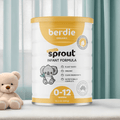
Sprout Organic Infant Formula, the world's first certified organic, certified vegan infant formula, is validated against FSANZ (Food Standards Australia New Zealand) infant nutrition standards. FSANZ requirements for iron in infant formula are similar to EU regulations — meaning Sprout delivers iron at clinically validated levels, just from plant-based mineral sources rather than animal-derived ones.


Three important points about Sprout's iron approach:


  • The iron quantity is the same as any other formula. Sprout is fortified to meet the same regulatory iron requirements as any cow milk or goat milk infant formula sold in Australia. The fact that Sprout uses plant-based iron sources does not mean less iron — it means iron from non-animal-derived ingredients, added at the same regulatory levels.

  • The iron form is bioavailable. Sprout uses iron forms that have been clinically validated for use in infant formula. The "plant iron is less bioavailable" concern applies to whole food sources of iron (lentils, spinach), not to fortified iron added to infant formula

  • The formula is designed as a complete nutritional solution. Like all regulated infant formulas, Sprout's iron content has been calibrated against the AAP/FSANZ requirements for the age range it serves. A baby on Sprout is not at greater risk of iron deficiency than a baby on cow milk formula, provided the formula is being used as directed and the baby is also being introduced to iron-rich solids after 6 months


For the full breakdown of how Sprout meets infant nutritional requirements, read our 2026 Parent's Guide to Sprout Organic. For a deeper look at the science behind plant-based infant nutrition, our plant-based formula myths debunked guide covers iron and other common concerns.

What About Goat Milk Formulas and Iron?

What About Goat Milk Formulas and Iron? | The Milky Box


A related but distinct misconception: some parents believe goat milk formulas have less iron than cow milk formulas. This one has a tiny kernel of truth that gets blown out of proportion.


The kernel of truth: Raw goat milk does contain slightly less iron than raw cow milk. But both are low — neither is anywhere close to meeting infant iron requirements without fortification. This is why all infant formulas (cow, goat, plant-based) must add iron during production.


The reality in finished formula: Jovie Goat Milk Formula and other reputable goat milk formulas are fortified to meet EU infant formula iron requirements — the same standards that apply to European cow milk formulas. The natural difference in raw milk iron content is completely irrelevant once the formula is fortified to regulatory levels.


Jovie Goat takes a thoughtful approach to its overall formulation:

  • Iron is fortified to meet EU infant formula requirements across all three stages

  • The full-fat goat milk base provides natural oligosaccharides similar to human milk oligosaccharides, which support overall gut health (and indirectly, iron absorption)

  • GOS prebiotics are added to support beneficial gut bacteria

  • The A2 protein structure is gentler on digestion, which can help babies who were struggling with absorption issues on other formulas

Goat milk formula iron levels in Jovie Stage 2 increase compared to Stage 1, in line with the increased iron requirements of babies 6+ months. This mirrors the same staging philosophy used in cow milk formulas. For a full breakdown of how Jovie's stages work, see our Jovie Goat Milk Formula: The Ultimate Guide.


The bottom line: a baby on Jovie Goat is not at greater risk of iron deficiency than a baby on cow milk formula. The fortification handles the iron requirements. The myth about "low iron in goat milk" applies to using raw goat milk as a substitute for formula (which is not safe for any infant), not to properly formulated goat milk infant formula.

Iron in Sprout, Jovie, and Other TMB Formulas

All formulas sold through The Milky Box meet their respective regulatory iron requirements. Here is how the main options compare:


Sprout Organic — Plant-Based Iron, FSANZ Validated

Sprout Organic — Plant-Based Iron, FSANZ Validated | The Milky Box


Sprout Organic is the proof-of-concept that a regulated plant-based infant formula can deliver complete nutrition — iron included. Sprout's iron content is fortified to FSANZ (Australian) standards, which are comparable to EU regulations. Plant-derived iron sources are used, but at the levels required to support healthy infant development.


The full Sprout lineup:

For families dealing with cow's milk protein allergy who need a fully dairy-free alternative, Sprout is a particularly important option — see our CMPA and plant-based formula guide for details.

Jovie Goat — Full-Fat Goat Milk with EU-Standard Iron

Jovie Goat — Full-Fat Goat Milk with EU-Standard Iron | The Milky Box


Jovie Goat delivers iron at EU regulatory levels — lower than US conventional formulas but in the range considered adequate when combined with iron-rich solid foods after 6 months. Jovie's overall formulation philosophy supports iron status in several indirect ways:

  • A2 protein and full-fat goat milk are gentler on digestion, supporting overall nutrient absorption

  • GOS prebiotics support a healthy gut environment

  • No palm oil means no calcium-fatty acid soap interference (palm oil's main downside also indirectly affects mineral absorption)

  • Iron levels increase across Jovie Stage 1, Stage 2, and Stage 3 to match changing requirements

For families transitioning to Jovie, our switching to Jovie guide walks through the process.

European Cow Milk Formulas

HiPP, Holle, Kendamil, and Lebenswert all use iron fortification levels in the EU regulatory range. Each brand differs in protein source, oil profile, and prebiotic/probiotic approach, but iron content is broadly comparable across the EU-standard formulas.

Bébé M — Medical-Grade Plant-Based with Targeted Iron

Bébé M is classified as a Food for Special Medical Purposes (FSMP) under EU regulations, designed for babies with confirmed cow's milk protein allergy. Its iron content is calibrated specifically for its medical use case, with attention to iron absorption alongside hydrolyzed rice protein.


For a complete brand comparison, use our Baby Formula Comparison Chart.

Iron Absorption: What Helps and Hurts It

Iron Absorption: What Helps and Hurts It | The Milky Box


Beyond the amount of iron in the formula itself, several factors affect how well your baby's body actually absorbs and uses it.


What enhances iron absorption:

  • Vitamin C —   significantly increases non-heme iron absorption. This is why fruits and vegetables paired with iron-rich foods help.

  • Acidic environments—  vitamin C and other organic acids enhance iron solubility in the gut.

  • Heme iron (from animal sources, when introducing solids) — better absorbed than non-heme iron.

  • A healthy gut environment — prebiotics like the GOS added to Sprout and Jovie support gut health, which indirectly affects mineral absorption.


What reduces iron absorption:

  • Calcium — when consumed at the same time as iron, calcium competes for absorption.

  • Phytates — naturally occurring in whole grains, legumes, and some seeds.

  • Tannins — found in tea, coffee, and some plant foods.

  • Palm oil — palm oil's calcium-binding effect on stool can indirectly affect calcium-iron interactions in the gut. Both Sprout and Jovie are palm oil-free.


For formula-fed babies, the formula is designed to deliver iron in a form and context that supports absorption. You generally do not need to do anything special. But once solid foods are introduced around 6 months, pairing iron-rich foods with vitamin C sources maximizes absorption.


For more on introducing solids alongside formula, see our toddler formula guide. For more on palm oil's broader effects, see our palm oil in baby formula guide.


Written by Suzanne Renee',

Infant Nutrition Expert

Suzanne Renee' is an accomplished professional with extensive expertise in the area of infant nutrition, dedicated to promoting the health and wellbeing of children. She started this journey as a foster parent.


Suzanne has emerged as a strong proponent of the European baby formula and has become a full-time writer on the subject.

In her free time, she enjoys camping, hiking, and going to church.

When to Talk to Your Pediatrician

When to Talk to Your Pediatrician | The Milky Box


Your pediatrician is your partner on iron — and there are specific moments when iron should be on the conversation list:


Routine well-child visits. Your pediatrician will monitor your baby's weight, growth, and developmental milestones. The AAP recommends a hemoglobin screening at the 12-month visit, but earlier checks may happen if there are risk factors.


If you suspect iron deficiency. Pale skin, fatigue, reduced appetite, slow weight gain, or developmental concerns warrant a conversation.


If you are switching to or from a plant-based formula. Some pediatricians are less familiar with regulated vegan infant formula and may raise iron concerns. Be ready to share the formula's nutrient panel and FSANZ validation — Sprout's ingredient list and complete nutritional profile are available on the Sprout collection page and in our 2026 Parent's Guide to Sprout Organic.


If your baby has been exclusively breastfed past 4 months. The AAP recommends 1 mg/kg/day of supplemental iron starting at 4 months for exclusively breastfed term infants.


If your baby has risk factors. Preterm birth, low birth weight, family history of anemia, or limited variety in solid foods after 6 months are all reasons to be more proactive about iron monitoring.


Never start an iron supplement on your own without pediatric guidance. Iron supplements can interact with other medications, can cause gastrointestinal upset, and in high doses can be acutely toxic.


Frequently Asked Questions

Does Sprout Organic have enough iron for my baby?

Yes. Sprout Organic is fortified to meet FSANZ infant formula iron requirements — comparable to EU regulations. The plant-based source of the iron does not affect its adequacy. Sprout meets the same regulatory iron standards as any other regulated infant formula sold in Australia. If your pediatrician has questions, the full nutrient panel is available on the product page.

Does Jovie Goat have less iron than cow milk formula?

In raw form, goat milk has slightly less iron than cow milk — but this is irrelevant in finished formula. Jovie Goat is fortified to EU infant formula iron standards, the same range as European cow milk formulas. There is no clinically meaningful iron difference between Jovie Goat and equivalent EU cow milk formulas.

My pediatrician says I should be on a higher-iron formula. What should I do?

Listen to your pediatrician — they have access to your baby's specific health information, including any blood test results. If they have specifically diagnosed iron deficiency or have specific concerns about your baby's iron status, follow their guidance. If the recommendation is general ("US formulas have more iron, so use those"), it is reasonable to share the EU/FSANZ regulatory context and the research on iron overexposure, and ask whether your specific baby actually needs higher iron levels or just standard regulatory levels.

My formula says it contains less iron than US formulas. Is this a problem?

Not necessarily. European and Australian formulas typically contain less iron than US formulas because their regulatory bodies have concluded lower levels are sufficient when paired with iron-rich solids after 4–6 months. These formulas have decades of safe use. If your baby has specific risk factors for iron deficiency, discuss with your pediatrician.

Should I be worried about iron overload from formula?

For most healthy term infants, no. The "iron overload" concern from research applies primarily to already iron-replete infants on high-iron US-style formulas (12+ mg/L). EU and Australian formulas, including Sprout and Jovie, use lower fortification levels that fall outside the high-iron range associated with the concern.

Can I give my baby an iron supplement on my own?

No. Always work with your pediatrician before giving any iron supplement.

What is the difference between iron deficiency and iron deficiency anemia?

Iron deficiency is when iron stores are low — you can have iron deficiency without yet having anemia. Iron deficiency anemia is when iron deficiency has progressed to the point where hemoglobin levels drop below normal range. Both warrant attention, but anemia is the more serious stage.

Do plant-based and goat milk formulas affect iron absorption differently than cow milk formula?

Not significantly. Iron absorption depends on the form of iron used in fortification (which is controlled by manufacturers) and on dietary factors like vitamin C and calcium intake. Sprout and Jovie both use forms of iron clinically validated for infant formula use.

Where can I buy Sprout, Jovie, and other European/Australian formulas in the US?

Through The Milky Box with all-inclusive pricing — import duties, customs, and tracked shipping covered. See our shipping policy for delivery details.

Disclaimer:


Please be aware that this information is based on general trends in babies, and it is not medical advice. Your doctor should be your first source of information and advice when considering any changes to your child’s formula and when choosing your child’s formula. Always consult your pediatrician before making any decisions about your child’s diet or if you notice any changes in your child.


Breastfeeding is the best nutrition for your baby because breast milk provides your child with all the essential nutrients they need for growth and development. Please consult your pediatrician if your child requires supplemental feeding.


Suzanne Renee' is an accomplished professional with extensive expertise in the area of infant nutrition, dedicated to promoting the health and wellbeing of children. She started this journey as a foster parent. Suzanne has emerged as a strong proponent of the European baby formula and has become a full time writer of the subject. In her free time, she enjoys camping, hiking and going to church.

Leave a Comment:

Comments will be approved before showing up.

Name:

Email:

Comment:

Read Next: