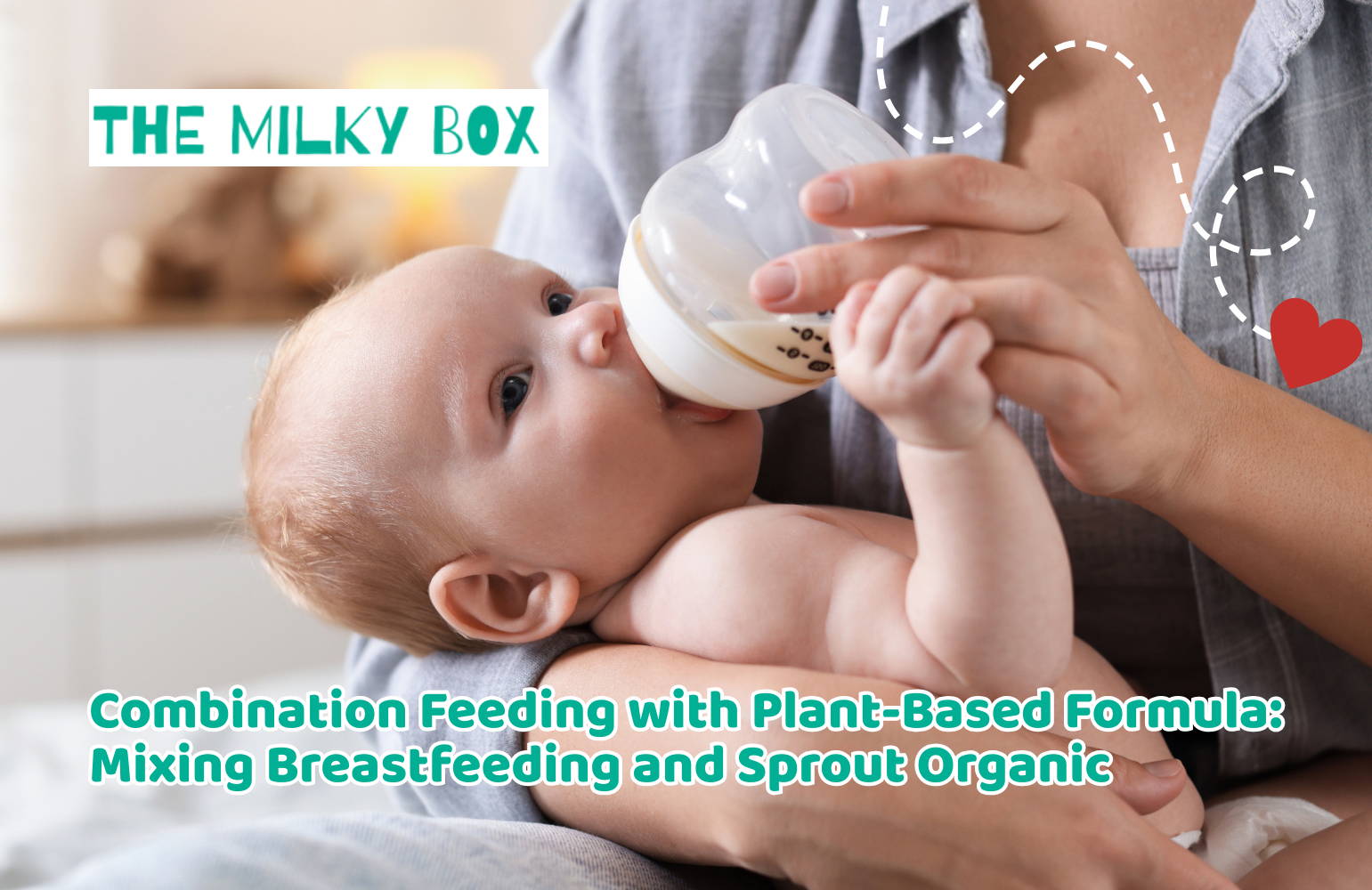
Combination Feeding with Plant-Based Formula: Mixing Breastfeeding and Sprout Organic


By: Suzanne Renee' - June 11, 2026 - 14 Minute Read

Combination Feeding with Plant-Based Formula: Mixing Breastfeeding and Sprout Organic

Combination feeding — sometimes called "combo feeding" — is the practice of feeding your baby both breast milk and formula. For some families, it is the plan from the start. For others, it becomes the reality after the realities of milk supply, returning to work, or simply needing a partner to help with feeds. For many, it is the practical middle ground that nobody talks about openly enough.


If you are combo feeding (or considering it) and you want a plant-based formula to pair with breastfeeding, Sprout Organic is one of the cleanest, most thoughtful options available. Certified organic, certified vegan, free from dairy, soy, palm oil, and corn syrup — and formulated to meet the same regulatory standards as any other infant formula sold legally.


This guide covers everything you need to know: how to safely combine Sprout with breast milk, the two main approaches (same-bottle vs alternating bottles), maintaining your milk supply, time limits, common scenarios, and what makes Sprout a strong choice for combo-feeding families. As always, talk to your pediatrician before making feeding decisions — especially if you have a newborn under two months, a preterm baby, or any medical conditions.


Evening Walks & Little Wonders:  A Guide to Combination  Feeding with Sprout Organic | The Milky Box

What Is Combination Feeding?

What Is Combination Feeding? | The Milky Box


Combination feeding is exactly what it sounds like: feeding your baby a combination of breast milk and infant formula. There is no single "right" way to do it — every family's combo feeding setup looks different, depending on milk supply, work schedules, baby's needs, and what feels manageable.


Some families combo feed from day one. Others start exclusively breastfeeding and add formula later. Others start with formula and add breast milk through pumping. All of these are valid combo feeding scenarios.


The American Academy of Pediatrics and the World Health Organization both recommend exclusive breastfeeding for the first 6 months when possible — and we wholeheartedly support that. Breast milk contains antibodies, healthy bacteria, and bioactive proteins that no formula can fully replicate. But exclusive breastfeeding is not always possible or desirable for every family, and combo feeding lets families continue offering breast milk's benefits while filling in the gaps with safe, nutritionally complete formula.


If you are exploring combo feeding, you are in the majority. Most US families end up combo feeding at some point during their baby's first year, even if they did not plan to.


Why Parents Combo Feed with Plant-Based Formula

Why Parents Combo Feed with Plant-Based Formula | The Milky Box


The reasons families choose combination feeding are varied. The reasons they specifically choose plant-based formula like Sprout for the formula portion are often more specific:

  • Family lifestyle and values Plant-based and vegan families often want their baby's formula to align with the same principles they apply to the rest of the household. Combo feeding lets them maintain breastfeeding while ensuring any supplemental formula is also plant-based.

  • Cow's milk protein allergy (CMPA). Some babies have CMPA but are also partially breastfed. In these cases, the breastfeeding parent often needs to eliminate dairy from her own diet, and the supplemental formula must also be dairy-free. Sprout fits both requirements. For more, see our CMPA and plant-based formula guide.

  • Avoiding corn syrup, palm oil, and other ingredients. Many US conventional formulas contain corn syrup solids and palm oil. Parents who choose plant-based formula often want to avoid these regardless of the dairy question. Sprout uses rice starch (not corn syrup), no palm oil, and no maltodextrin.

  • Soy Avoidence. US soy formulas like Enfamil ProSobee are an option for dairy avoidance, but many parents want to avoid soy too. Sprout uses pea and rice protein — no soy. See our Sprout vs Enfamil ProSobee comparison for the side-by-side.

  • Multiple sensitivities. When dairy, goat milk, and soy have all failed (or the parent wants to avoid all three), plant-based formula offers a fundamentally different protein source.

  • Religious dietary compliance. Sprout is halal certified, which matters for some families.

For a fuller picture of why parents are choosing plant-based options, see our pillar piece on plant-based baby formula in 2026.

Same Bottle vs Alternating Bottles

Same Bottle vs Alternating Bottles | The Milky Box


There are two main ways to combo feed:


1. Alternating bottles. Your baby gets some feeds of breast milk and other feeds of formula. They are never combined in the same bottle. For example: morning nursing session, afternoon formula bottle, evening nursing session, overnight formula bottle.


2. Same-bottle mixing. Breast milk and prepared formula are combined in one bottle before feeding.


Alternating is generally the preferred approach when practical, for two reasons:

  • Some research suggests that mixing formula directly with breast milk may slightly reduce breast milk's protective bioactive components.

  • If your baby does not finish a mixed bottle, you risk wasting precious breast milk along with the formula. Feeding expressed breast milk first, then topping up with formula if needed, helps you protect every drop.

Same-bottle mixing is safe and acceptable, and many families use it successfully for convenience. There is no medical reason to avoid it — just acknowledge the small trade-off and the breast milk waste risk.


In practice, many combo-feeding families use both approaches depending on the situation: alternating for routine daily feeds, mixing same-bottle when traveling or in convenience-needed scenarios.

The Golden Rule: How to Safely Mix Sprout with Breast Milk

The Golden Rule: How to Safely Mix Sprout with Breast Milk | The Milky Bx


This is the most important safety information in this article, so we are putting it in plain language:


Always prepare Sprout with water first, exactly as the package instructs. Then add breast milk to the prepared formula. Never substitute breast milk for water when mixing formula powder.


Here is why this matters: Sprout (like all infant formulas) is calibrated to provide specific nutrient concentrations when mixed with a specific volume of water. If you skip the water and mix the powder directly with breast milk, you create a formula that is too concentrated — meaning too many calories, too much protein, too many minerals per ounce. This can stress your baby's kidneys, cause dehydration, and lead to digestive issues.


The correct method, step by step:

  • Wash your hands thoroughly

  • Use a sterilized bottle and feeding equipment (especially for newborns under 3 months).

  • Prepare Sprout following the package instructions exactly: boil water, cool to the right temperature (approximately 50°C / 122°F per Sprout's instructions — refer to the can for the most current guidance), pour the correct volume of water into the bottle, add the correct number of level scoops, and mix until fully dissolved.

  • Once the formula is properly prepared, gently add fresh or freshly thawed expressed breast milk to the bottle.

  • Swirl gently — do not shake vigorously — to combine. Gentle handling preserves more of the breast milk's bioactive components.

  • Test the temperature on the inside of your wrist before feeding.

  • Use within the time limits below, and discard any unfinished milk after the feed.

For detailed Sprout preparation instructions across all stages, visit our formula prep guide.

How Much Breast Milk + How Much Sprout?

How Much Breast Milk + How Much Sprout? | The Milky Box


There is no universal formula (pun intended) for the ratio of breast milk to Sprout — it depends entirely on your supply, your baby's age and needs, and your overall feeding plan.


Some common combo-feeding patterns:

  • Mostly breastfeeding, occasional formula top-ups. Breast milk for most feeds, with one or two Sprout bottles per day (often when a partner is doing a feed, or to extend baby's stretch between night feeds). Useful when supply is mostly adequate but baby occasionally needs more.

  • Half and half. Roughly equal numbers of breastfeeding sessions and Sprout bottles. Common for parents returning to work — nursing in the morning and evening, with Sprout bottles during the workday.

  • Mostly formula, with breastfeeding as comfort/bonding. Sprout as the main calorie source, with breastfeeding mostly for the connection and the antibodies it still provides. Common when supply is low or weaning is underway.

  • Topping up after breastfeeding. Nursing first, then offering a small amount of Sprout to ensure baby is satisfied. Common during growth spurts or for slower-gaining babies under pediatric guidance.

Your baby's overall daily intake — and signs of adequate nutrition like weight gain, wet diapers (5–6 a day after the first 4–5 days), and contented behavior between feeds — matter more than the specific ratio at any given moment. Your pediatrician will help you track this through routine well-child visits.


For a complete picture of how much formula your baby needs at each age, see our Jovie Goat for Newborns guide — the feeding amount tables apply to Sprout too, since the recommendations are based on baby weight, not formula brand.

Maintaining Your Milk Supply While Combo Feeding

Maintaining Your Milk Supply While Combo Feeding | The Milky Box


This is one of the biggest practical concerns for parents who want to keep breastfeeding while supplementing with formula. Milk supply works on supply and demand — the more milk you remove (through nursing or pumping), the more your body produces. When formula replaces breastfeeding sessions, your body gets the signal to produce less.


If maintaining your milk supply matters to you, here are practical strategies:

  • Pump when your baby takes a Sprout feed. This is the single most important strategy. If a partner gives a Sprout bottle while you are at work or sleeping, pump around the same time (or as soon as you can) to keep removing milk on a similar schedule.

  • Nurse first when you can. When you are with your baby and supplementing in the same feed, let them nurse first to empty the breast as much as possible, then offer Sprout to top up if needed. This preserves the supply signal.

  • Cluster pump during transitions. If you are returning to work or making other schedule changes, add an extra pumping session in the early days to maintain supply through the transition.

  • Stay hydrated and well-nourished. Your body needs the raw materials to make milk. Combo feeding can sometimes paradoxically cause moms to eat or drink less, which can affect supply.

  • Avoid replacing nursing sessions too quickly. If you want to maintain supply, do not jump from exclusive breastfeeding to 50/50 combo feeding overnight. Gradual transitions give your body time to adjust without rapidly dropping supply.

  • Talk to a lactation consultant if supply concerns persist. They can assess your specific situation and offer targeted strategies.

If you are transitioning fully away from breastfeeding, our transitioning from breast to bottle guide covers the process.


Storage and Time Limits

Storage and Time Limits | The Milky Box


Combination feeding has slightly tighter storage rules than either pure breastfeeding or pure formula feeding, because mixed bottles inherit the more restrictive timeline of formula.


Once breast milk and Sprout are combined in a bottle:

  • Use within 1 to 2 hours at room temperature.

  • If refrigerated immediately after mixing (and not yet offered to baby), use within 24 hours.

  • Never refreeze a mixed bottle, and never store partially consumed bottles to reuse later.

For unmixed feeds:

  • Freshly expressed breast milk can be stored at room temperature for up to 4 hours, refrigerated for up to 4 days, and frozen for 6 months (or up to 12 months in a deep freezer).

  • Prepared Sprout that has not been mixed with breast milk follows standard formula storage: 2 hours room temperature, 24 hours refrigerated (before offering to baby).

Important once the bottle is offered to baby: Bacteria from the baby's mouth enter the bottle during feeding. Any milk left in the bottle should be discarded within 1 hour of when the feed began, regardless of whether it is breast milk, formula, or a mix.


For the full Sprout storage breakdown, see our vegan baby formula FAQ Part 3.

Common Combo Feeding Scenarios

Common Combo Feeding Scenarios | The Milky Box


Returning to work. Probably the most common reason parents start combo feeding. Nurse in the morning before leaving, send Sprout bottles to daycare (or have your caregiver prepare them), pump during the workday to maintain supply, nurse when you are home in the evening and overnight.


Low milk supply. When supply is not keeping pace with baby's needs, Sprout fills the gap while you continue breastfeeding for the volume you can produce. Often the difference between "not enough breast milk" and "I had to stop breastfeeding entirely."


Growth spurts. Babies hit growth spurts at predictable points (around 2 weeks, 6 weeks, 3 months, 6 months) where they want more milk than your supply can match. A few extra ounces of Sprout during these stretches can take pressure off — and your supply usually catches up within a few days.


Multiples (twins, triplets). Producing enough milk for more than one baby is genuinely difficult. Combo feeding with Sprout is often a necessary part of feeding multiples.


Mental health and sleep. Sleep deprivation is one of the most underrated factors in postpartum mental health. Combo feeding lets a partner take overnight Sprout feeds while the breastfeeding parent gets longer sleep stretches.


Adoption, surrogacy, or non-lactating parents. Sprout serves as a complete nutrition source while breast milk (donor or limited produced milk) is offered as available.


Transitioning to formula. When you are ready to stop breastfeeding, combo feeding gives you a gradual off-ramp. Replace one breastfeeding session at a time with Sprout, over weeks or months, allowing your supply to gradually decrease without engorgement or mastitis.

Why Sprout Works Well for Combo Feeding

Why Sprout Works Well for Combo Feeding | The Milky Box


Sprout was not specifically designed for combo feeding — it is designed as a complete plant-based infant formula. But several characteristics make it particularly suited to families who are combining breast milk with formula:


Plant-based protein is gentle. Sprout uses organic fermented pea protein and organic fermented and sprouted rice protein — a blend that delivers all essential amino acids without dairy or soy. For babies who are receiving primarily breast milk and getting small amounts of supplemental formula, this gentle protein source is easy on developing digestive systems. Read our rice protein vs pea protein guide for more.


Fortified with the nutrients combo feeders care about. Sprout includes algal DHA (no fish oil), plant-based iron at FSANZ-validated levels, calcium, vitamin D, B12, and the full range of vitamins and minerals required for infant nutrition. For more on Sprout's iron approach, see our baby formula and iron guide.


No palm oil, no corn syrup, no maltodextrin. When you are pairing formula with breast milk, you generally want the formula's ingredient profile to be as clean as possible. Sprout's ingredient list is one of the shortest and cleanest in the category. See our palm oil in baby formula guide.


Plant-based probiotics support gut development. Sprout includes a Lactobacillus acidophilus probiotic alongside inulin prebiotics, supporting the gut microbiome alongside breast milk's own bioactive components.


Certified organic, certified vegan, halal certified, carbon neutral. For families whose feeding choices reflect broader values, Sprout's certifications hold up.


Available in three stages. Sprout Organic Infant Formula (0–12 months) is the infant stage. Sprout Organic Toddler Drink (12+ months) continues plant-based nutrition past the first year. Sprout Essential Shakes (12+ months) provide toddler nutrition support if you continue combo feeding past 12 months.


For a complete look at the Sprout range, read our 2026 Parent's Guide to Sprout Organic.

When to Talk to Your Pediatrician

When to Talk to Your Pediatrician | The Milky Box


Combo feeding is generally safe and works for millions of families — but a few specific situations warrant a conversation with your pediatrician:


Before starting, if your baby is under 2 months old, was born preterm, or has any medical conditions. Pediatricians often want to monitor newborn weight gain carefully when feeding changes happen.


If you are concerned about milk supply. Whether it is dropping unexpectedly, not building enough in the first place, or you are worried about over-supplementing, your pediatrician (and a lactation consultant if available) can help.


If your baby is showing signs of intolerance. Persistent fussiness, blood or mucus in stool, severe gas, or eczema flares could indicate a sensitivity to something in the formula. With Sprout being dairy-free, soy-free, and plant-based, this is rare — but it can happen with pea or rice sensitivity. See our signs your formula doesn't agree with your baby guide.


If you are managing CMPA and breastfeeding. The breastfeeding parent typically needs to eliminate dairy (and sometimes soy) from her own diet. A pediatrician and dietitian can help with this.


If your baby is not gaining weight as expected. Combo feeding makes it easier to track intake (you know exactly how much formula your baby is drinking), and your pediatrician can help adjust the balance if growth is slow.


Before introducing solids around 6 months. This is a natural inflection point in combo feeding — your pediatrician will likely have updated guidance on iron-rich first foods and how feeding patterns should shift.


Written by Suzanne Renee',

Infant Nutrition Expert

Suzanne Renee' is an accomplished professional with extensive expertise in the area of infant nutrition, dedicated to promoting the health and wellbeing of children. She started this journey as a foster parent.


Suzanne has emerged as a strong proponent of the European baby formula and has become a full-time writer on the subject.

In her free time, she enjoys camping, hiking, and going to church.

Frequently Asked Questions

Is it safe to mix breast milk and Sprout in the same bottle?

Yes, as long as you prepare the Sprout with water first (per package instructions) and then add the breast milk. Never substitute breast milk for water when mixing formula powder.

Will combo feeding with Sprout affect my milk supply?

It can, if you are not careful. Milk supply works on demand — fewer nursing or pumping sessions signal your body to produce less milk. To maintain supply while combo feeding, pump around the times your baby takes a Sprout bottle, nurse first when possible, and transition gradually rather than suddenly.

My baby drinks breast milk fine but refuses Sprout. 

Some babies need time to adjust to formula's taste, which is different from breast milk. Try offering Sprout when your baby is hungry but not overly so. Have a partner or caregiver offer it (sometimes babies refuse bottles from their breastfeeding parent because they expect the breast). Try different bottle temperatures — some babies prefer formula slightly warmer than room temp. Be patient — it can take several attempts before a baby accepts a bottle.

Can I use Sprout if I am breastfeeding a baby with CMPA?

Yes, this is one of the scenarios Sprout is well-suited for. However, breastfeeding parents of babies with CMPA usually also need to eliminate dairy (and sometimes soy) from their own diet, since milk proteins can pass through breast milk. Work with your pediatrician.

How long can a mixed bottle of Sprout and breast milk sit out?

Use within 1 to 2 hours at room temperature. If refrigerated immediately after mixing and not yet offered to baby, use within 24 hours. Once your baby has started drinking from the bottle, discard any remaining contents within 1 hour of when the feed began.

Should I start with same-bottle mixing or alternating bottles?

Alternating bottles is generally preferred when practical, because it preserves the full nutritional integrity of both breast milk and formula and avoids wasted breast milk. Same-bottle mixing is safe and acceptable, especially for convenience, but is a slight trade-off.

Can I combo feed with Sprout from the very first day?

Yes — Sprout Organic Infant Formula is formulated for use from birth. However, if you have specific feeding goals (like establishing exclusive breastfeeding before introducing any formula), discuss the timing with your pediatrician or lactation consultant. Many lactation experts recommend waiting until breastfeeding is well-established (typically 3 to 4 weeks) before introducing formula bottles, if possible.

Where can I buy Sprout in the US?

Through The Milky Box with all-inclusive pricing — import duties, customs paperwork, and tracked shipping covered. See our shipping policy for delivery details.

Disclaimer:


Please be aware that this information is based on general trends in babies, and it is not medical advice. Your doctor should be your first source of information and advice when considering any changes to your child’s formula and when choosing your child’s formula. Always consult your pediatrician before making any decisions about your child’s diet or if you notice any changes in your child.


Breastfeeding is the best nutrition for your baby because breast milk provides your child with all the essential nutrients they need for growth and development. Please consult your pediatrician if your child requires supplemental feeding.


Suzanne Renee' is an accomplished professional with extensive expertise in the area of infant nutrition, dedicated to promoting the health and wellbeing of children. She started this journey as a foster parent. Suzanne has emerged as a strong proponent of the European baby formula and has become a full time writer of the subject. In her free time, she enjoys camping, hiking and going to church.

Leave a Comment:

Comments will be approved before showing up.

Name:

Email:

Comment:

Read Next: