Vegan Baby Formula FAQ: Your Questions Answered (Part 3)


By: Suzanne Renee' - April 28, 2026 - 10 Minute Read

Vegan Baby Formula FAQ: Your Questions Answered (Part 3)


Part 1 covered the fundamentals — safety, protein, DHA, certifications, allergies, and how to switch. Part 2 went deeper into ingredients, label reading, what to tell your pediatrician, reflux, and cost.


Part 3 is for parents who are already using plant-based formula — or about to start — and need the practical, day-to-day answers. Storage, mixing, digestion, nutrients, travel, toddler transitions, and the arsenic-in-rice question that comes up every single week.


Same as always: reviewed by our team, not a substitute for your pediatrician's advice.


Vegan Baby Formula FAQ: Your Questions Answered (Part 1)

Can I mix breast milk with vegan formula in the same bottle?

Can I mix breast milk with vegan formula in the same bottle?


Yes — this is safe and common. Many parents combine breast milk and formula in a single bottle, particularly when supplementing during the transition from breastfeeding to formula feeding. The approach works the same way with plant-based formula as it does with dairy-based.


A few things to keep in mind: always prepare the formula with water first according to the manufacturer's instructions, then add the breast milk to the prepared formula. Never use breast milk instead of water to mix formula powder — the concentration of nutrients will be too high, which can stress your baby's kidneys and digestive system.


If you are transitioning from breast milk to formula gradually, our guide to transitioning from breast to bottle covers the process in detail, including pacing, bottle selection, and how to maintain your milk supply if you are combination feeding. For formula-specific mixing instructions, visit our formula prep guide.

Does plant-based formula cause constipation or digestive changes?

Does plant-based formula cause constipation or digestive changes?


Any formula switch can temporarily change your baby's digestion — this is true whether you are switching from breast milk to formula, from one formula brand to another, or from dairy to plant-based. The gut microbiome needs time to adjust to a new protein and carbohydrate source.


With plant-based formulas like Sprout Organic, many parents actually report softer, more regular stools compared to what they saw on cow milk formula. This is partly because Sprout uses rice starch as its carbohydrate rather than lactose (which some babies struggle to break down efficiently), and partly because the pea and rice protein blend produces a different digestive response than dairy proteins.


That said, some temporary changes during the first 1–2 weeks of switching are completely normal. Gas, slight changes in stool color or consistency, and minor fussiness can all be part of the adjustment period. If symptoms persist beyond two weeks, or if you see signs of genuine distress — blood in stool, refusal to feed, significant weight loss — contact your pediatrician immediately.


For more on what to expect during a formula transition, our switching formula guide covers the timeline and warning signs to watch for. For ongoing digestive concerns, start with our constipation guide.

Is there enough iron, calcium, and B12 in vegan formula?

Is there enough iron, calcium, and B12 in vegan formula?


Yes. Any formula legally sold for infants — plant-based or otherwise — must meet strict minimum and maximum levels for all essential micronutrients, including iron, calcium, vitamin D, vitamin B12, zinc, and the full range of vitamins and minerals an infant needs for healthy development.


Sprout Organic Infant Formula is validated against FSANZ (Food Standards Australia New Zealand) infant nutrition standards, which specify exact required levels for over 30 nutrients. This is not a suggestion — it is a legal requirement. If the formula does not meet these levels, it cannot be sold as infant formula.


B12 is a common concern for parents familiar with vegan adult diets, where supplementation is often necessary. In infant formula, B12 is always fortified regardless of whether the formula is dairy or plant-based. Your baby's B12 intake from Sprout Organic is not left to chance — it is built into the formulation at the required level.


For a full ingredient and nutrient breakdown, see our 2026 Parent's Guide to Sprout Organic.

Why does Sprout use rice protein — isn't there arsenic in rice?

Why does Sprout use rice protein — isn't there arsenic in rice?


This is the question we hear the most, and it deserves a straight answer.


Rice, like all plants grown in soil, can absorb trace amounts of naturally occurring heavy metals — including arsenic — from the ground and irrigation water. This is a real phenomenon, and it applies to rice in all forms: rice cereal, rice crackers, rice milk, and rice-based formula ingredients.


Here is what matters for infant formula specifically: the rice protein used in formulas like Sprout Organic is hydrolyzed and purified during processing, which significantly reduces heavy metal content compared to whole grain rice products. Studies published in peer-reviewed journals have found that arsenic levels in hydrolyzed rice-based infant formulas are comparable to — and in many cases lower than — levels found in conventional dairy formulas and tap water.


Additionally, Sprout Organic is regulated under FSANZ, which sets strict maximum limits for contaminants in infant formula. Every batch must test below these limits before it can be sold.


The bottom line: the arsenic concern is valid for high-volume consumption of unprocessed rice products. It is not a meaningful risk in regulated infant formula where the protein has been processed, purified, and tested to meet strict safety thresholds. If you want to discuss this further with your pediatrician, our toxic ingredients to avoid guide covers heavy metals and other contaminants in more detail.

How long does a can of Sprout last once opened?

How long does a can of Sprout last once opened?


Once opened, Sprout Organic formula should be stored in a cool, dry place (below 25°C / 77°F) with the lid tightly closed. Use the contents within 4 weeks of opening. This applies to all four Sprout products — Infant Formula, Toddler Drink, and both Essential Shakes.


Once you have prepared a bottle, use it within 2 hours at room temperature. If refrigerated, prepared formula can be stored for up to  24 hours but should never be reheated more than once. Discard any formula left in the bottle after a feed — do not save and reuse it.


These guidelines are standard across infant formulas, not unique to Sprout. For a complete walkthrough of preparation, storage, and water temperature, visit our formula prep guide.

How do I prepare plant-based formula when traveling?

How do I prepare plant-based formula when traveling?


Traveling with formula does not need to be complicated, but it does require a bit of planning.


Pre-measure the powder. Use a formula dispenser or small, sealed containers to portion out the exact number of scoops you will need for each feed. This saves time and avoids the mess of scooping on the go.


Bring safe water. If you are unsure about the water quality at your destination, use bottled water with low mineral content (sometimes labeled "suitable for infant feeding") or boil and cool tap water as you normally would. Do not use mineral water with high sodium or sulfate levels.


Carry a thermos. Bring pre-boiled water in a thermos at the right temperature (50–70°C for Sprout) so you can mix on the go without waiting for a kettle.


Check airline rules. In the US, TSA allows formula powder in carry-on bags in reasonable quantities. Prepared formula in bottles is also permitted but may be subject to additional screening. Always declare it at the security checkpoint.


Do not pre-mix and store for long periods. Prepare each bottle as close to feeding time as possible. If you must prepare in advance, keep it refrigerated and use within 24 hours.


For general preparation guidance, our formula prep guide covers water temperature, mixing ratios, and storage.

What is the difference between Sprout Infant Formula and Sprout Toddler Drink?

What is the difference between Sprout Infant Formula and Sprout Toddler Drink?


Both are plant-based, certified organic, and certified vegan. The difference is the nutrient profile — each is designed for a specific developmental stage.


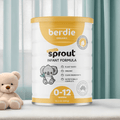
Sprout Organic Infant Formula (0–12 months) is a complete source of nutrition designed to be the sole or primary food source for babies in their first year. It meets the strict FSANZ requirements for infant formula, including specific levels of energy, protein, fat, iron, calcium, DHA, and the full range of vitamins and minerals a baby needs from birth.


Sprout Organic Toddler Drink (12+ months) is designed as a nutritional supplement to a solid food diet. It has a different protein, fat, and micronutrient balance than the infant formula — tailored for the needs of a child who is eating solids as their primary food source and using the drink to fill nutritional gaps. It also includes plant-based probiotics (Bacillus coagulans) for gut health support.


These are not interchangeable. Using toddler drink for an infant under 12 months means your baby will not receive the right nutrient levels for their developmental stage. Using infant formula for a toddler over 12 months is less concerning but means they are not getting the age-adjusted nutrient profile designed for their growth stage.


Our toddler formula guide covers when and how to make the transition.

Can my toddler use the Sprout Essential Shakes as a meal replacement?

Can my toddler use the Sprout Essential Shakes as a meal replacement?

No — the Sprout Essential Shakes (Vanilla and Chocolate) are nutrition supplements, not meal replacements. They are designed to complement a toddler's solid food diet by filling nutritional gaps — delivering 10g of complete plant protein per serve along with iron, calcium, vitamin D, B12, and algal DHA.


Think of them as a nutritional safety net for busy days, picky eating phases, or times when your toddler's solid food intake is inconsistent. They should not replace meals, formula, or breast milk as a primary nutrition source.


If your toddler is not yet eating a varied solid diet and still relies heavily on formula for the majority of their calories, the Sprout Organic Toddler Drink is the more appropriate product — it is formulated as a nutritional drink, not a supplement.

Can I use plant-based formula alongside solid foods?

Can I use plant-based formula alongside solid foods?


Absolutely — and in fact, this is exactly how formula is meant to be used from around 6 months onward. From birth to approximately 6 months, formula (or breast milk) is your baby's sole source of nutrition. From 6 months, you begin introducing solid foods while continuing formula as the primary nutritional base. By 12 months, the balance shifts — solid foods become the main event, and formula or toddler drinks fill in the gaps.


Plant-based formula works exactly the same way in this timeline as dairy or goat milk formula. The introduction of solids — purees, cereals, soft finger foods — follows the same schedule and principles regardless of your formula type.


If you are exploring how to introduce solids alongside formula, our baby feeding chart gives a month-by-month overview of what to expect.


Still have questions? We are always collecting new ones. Email us at hello@themilkybox.com and your question could make it into Part 4.


Browse the full Sprout Organic collection or explore all formulas at The Milky Box.


Until Our next adventure!


 Australian organic, complete plant-based nutrition

Disclaimer:

Please be aware that this information is based on general trends in babies, and it is not medical advice. Your doctor should be your first source of information and advice when considering any changes to your child’s formula and when choosing your child’s formula. Always consult your pediatrician before making any decisions about your child’s diet or if you notice any changes in your child.


Breastfeeding is the best nutrition for your baby because breast milk provides your child with all the essential nutrients they need for growth and development. Please consult your pediatrician if your child requires supplemental feeding.


Suzanne Renee' is an accomplished professional with extensive expertise in the area of infant nutrition, dedicated to promoting the health and wellbeing of children. She started this journey as a foster parent. Suzanne has emerged as a strong proponent of the European baby formula and has become a full time writer of the subject. In her free time, she enjoys camping, hiking and going to church.

Leave a Comment:

Comments will be approved before showing up.

Name:

Email:

Comment:

Read Next:


Reviewed by Suzanne Renee',

Infant Nutrition Expert

Suzanne Renee' is an accomplished professional with extensive expertise in the area of infant nutrition, dedicated to promoting the health and wellbeing of children. She started this journey as a foster parent.


Suzanne has emerged as a strong proponent of the European baby formula and has become a full-time writer on the subject. 


In her free time, she enjoys camping, hiking, and going to church.