Flavored Toddler Formula: Are Vanilla and Chocolate Really Healthy?


By: Suzanne Renee' - July 15, 2026 - 10 Minute Read

Flavored Toddler Formula: Are Vanilla and Chocolate Really Healthy?r | The Milky Box

Choosing a nutritional shake for a toddler can feel complicated. Parents often see long ingredient lists and familiar flavors such as vanilla and chocolate—flavors more commonly associated with desserts than balanced nutrition. But flavor alone does not determine whether a product is healthy. What matters is how the flavor is created, the amount and source of sweetness, the overall nutritional profile, the child’s age, and how the shake fits into the child’s diet.


The short answer: vanilla and chocolate toddler nutritional shakes can be appropriate for children aged 12 months and older when the complete product is suitable and used as part of a varied diet. A familiar flavor does not automatically mean high sugar or poor nutrition.


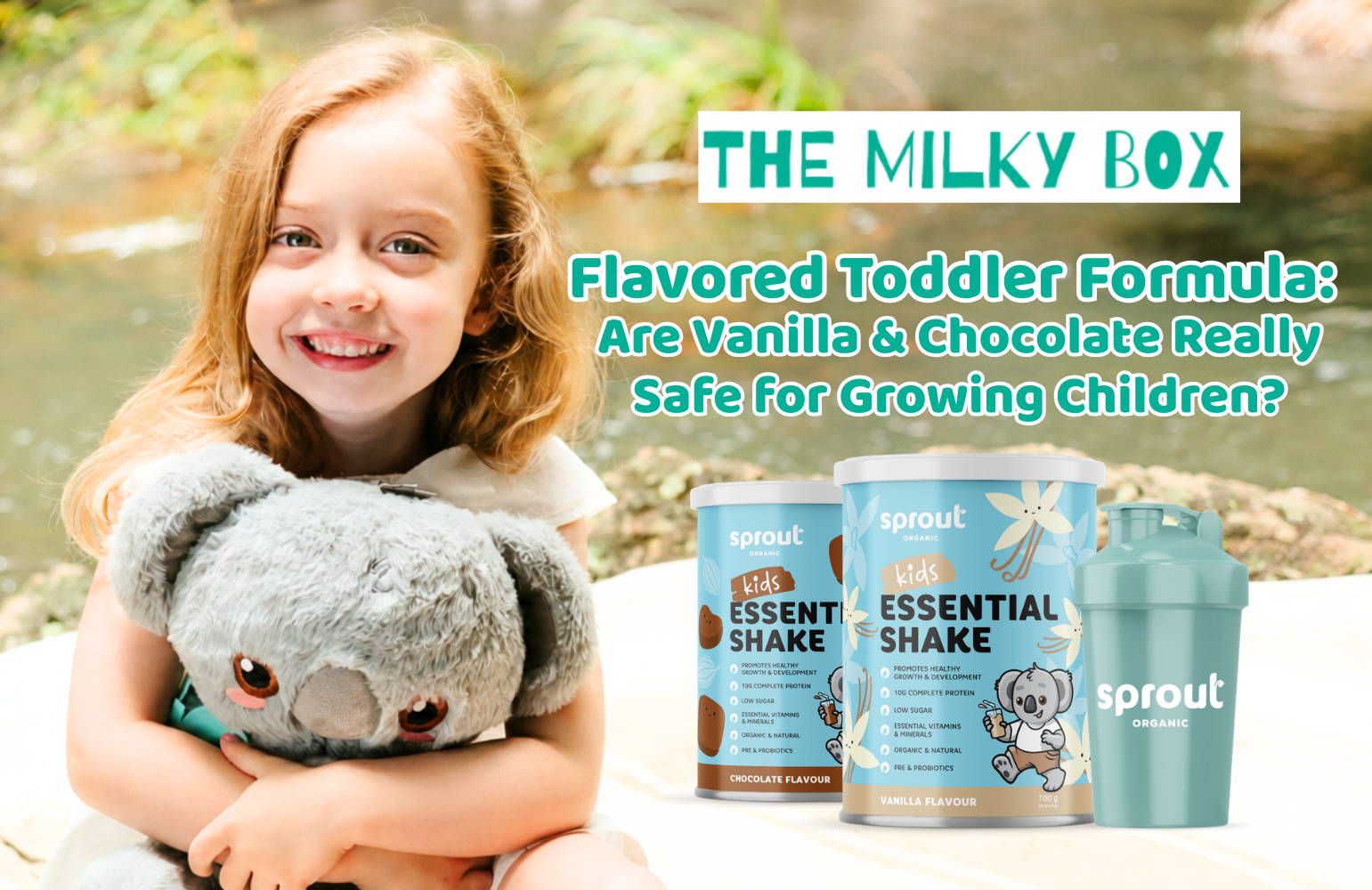
This guide explains flavor terminology, compares international rules, summarizes research on early flavor learning, and shows parents what to check before buying. It also uses Sprout Organic Essential Shake Vanilla and Chocolate as a practical example of a plant-based nutritional shake for children aged 12 months and older.


For broader background, see The Milky Box guides to Sprout Organic: Certified Vegan Infant Formula, Plant-Based Baby Formula Myths Debunked: What Parents Get Wrong in 2026 plant-based baby formula myths, and Combination Feeding with Plant-Based Formula: Mixing Breastfeeding and Sprout Organic.


Welcome to Flavorland Sprot Organic Essential Shake | The Milky Box

Why Does Sprout Organic Essential Shake Come in Different Flavors?

Why Does Sprout Organic Essential Shake Come in Different Flavors? | The Milky Box


Children are born with a biological preference for sweet tastes. Human milk naturally contains lactose and has a mildly sweet taste. Scientific reviews show that sweet preference has both innate and learned components, while food preferences continue developing through experience and repeated exposure. Read the research review on innate and learned preferences for sweet taste during childhood.


A nutritional shake must provide useful nutrients while remaining pleasant enough for a child to drink. Familiar flavors such as vanilla and chocolate can improve acceptability, but they do not tell parents whether the overall formulation is nutritious.


Flavor Does Not Equal Sugar

Flavor Does Not Equal Sugar | The Milky Box


Flavor and sweetness are different characteristics. Vanilla flavor comes mainly from aromatic compounds; chocolate flavor may come from cocoa and its naturally occurring aroma compounds. Neither ingredient is automatically sweet. Cocoa itself is naturally bitter, while the sweetness people associate with chocolate usually comes from sugar or another sweetening ingredient.


A vanilla product may contain little or no added sugar, while an unflavored product may still contain substantial sugar. A chocolate shake made with cocoa can also have a balanced nutritional profile. Parents should therefore compare the nutrition panel and ingredient list rather than judging the product by the flavor printed on the front.

  • Check total andadded sugars per serving.

  • Identifysweetening ingredients, including alternatives to refined sugar.

  • Review protein,fibre, fats, vitamins, and minerals.

  • Confirm the serving size and recommended age.

  • Consider how the shake fits into the child’s complete daily diet.

The phrase “no refined sugar” does not necessarily mean unsweetened. A product may use another sweetening ingredient, so parents should always review the complete label.


What Does “Natural Flavor” Actually Mean?

What Does “Natural Flavor” Actually Mean? | The Milky Box


“Natural flavor” is a regulatory term, not a promise that a product contains only whole vanilla beans, cocoa, or fruit. In general, it refers to flavoring ingredients obtained from qualifying natural sources through recognized preparation or processing methods. The exact definition and labeling rules depend on the jurisdiction in which the food is sold.


Likewise, “artificial flavor” does not automatically mean unsafe. Artificial flavorings must comply with applicable food-safety requirements. The words natural and artificial describe regulatory categories; by themselves, they do not establish a product’s nutritional value.

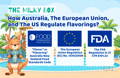
How Australia, the EU, and the US Regulate Flavorings

How Australia, the EU, and the US Regulate Flavorings | The Milky Box


Australia and New Zealand. Ingredients and labeling are governed by the Australia New Zealand Food Standards Code. According to Food Standards Australia New Zealand’s labeling guidance, many flavorings may be declared using the class name “flavor” or “flavoring.”


European Union. In the European Union, Regulation (EC) No. 1334/2008 establishes definitions, conditions of use, source-material rules, labeling requirements, and criteria for using the term “natural.”


United States. In the United States, the FDA definitions and labeling requirements for natural and artificial flavors appear in 21 CFR §101.22.


The wording differs across regions, but the practical lesson is consistent: parents should look beyond how familiar an ingredient name sounds and assess regulatory compliance, the complete ingredient list, and the product’s nutritional profile.

Vanilla vs. Chocolate: Which Flavor Is Better for Toddlers?

Vanilla vs. Chocolate: Which Flavor Is Better for Toddlers? | The Milky Box


Neither flavor is inherently healthier. A chocolate shake made with cocoa and an appropriate nutritional profile may be a better fit than a vanilla shake with more added sugar. Equally, vanilla can be a useful mild flavor without being “just sugar.” Nutritional quality depends on the whole formulation.


  • Choose Vanilla when a child prefers a milder taste or when the shake will be mixed into foods such as oatmeal or smoothies.

  • Choose Chocolate when a child prefers a richer cocoa taste; the word chocolate does not by itself indicate a high-sugar product.

  • Rotate suitable flavors if variety helps, while continuing to offer many whole foods, tastes, and textures.

What's Inside Sprout Organic Essential Shake: Vanilla & Chocolate

For children aged 12 months and older, Sprout Organic Essential Shake is a plant-based nutritional shake available in Vanilla and Chocolate. According to the manufacturer’s current product information, it provides plant protein together with vitamins, minerals, fibre, algal DHA, and probiotics. Parents should always check the latest label because recipes and nutrient values can change.


The Vanilla variety uses natural flavor. The Chocolate variety includes organic cocoa powder as well as natural flavor. Both contain steviol glycosides, which the manufacturer identifies as an organic natural sweetener. This illustrates why “no refined sugar” and “unsweetened” are not identical claims.


Flavor is only one part of the decision. Assess age suitability, allergens, sweeteners, protein, fats, fibre, vitamins and minerals, serving size, and the child’s individual needs. For a detailed product comparison, read The Milky Box’s Sprout Essential Shakes: A Parent's Guide to Toddler Nutrition Beyond Formula.

Does Flavored Toddler Nutritional Shakes Shape Food Preferences?

Does Flavored Toddler Nutritional Shakes Shape Food Preferences? | The Milky Box


A single vanilla or chocolate product does not permanently determine a child’s preferences. Taste development is influenced by biology, family eating patterns, culture, familiarity, repeated exposure, and the variety of foods offered over time.


Flavor Learning Begins Early 

Babies begin experiencing flavors before eating solid food. Aroma and flavor compounds from a mother’s diet may enter amniotic fluid during pregnancy and breast milk after birth. The study Prenatal and Postnatal Flavor Learning by Human Infants found that early exposure to a flavor increased later acceptance of that flavor in a complementary food.


Children then continue learning through milk feeding, complementary foods, family meals, and repeated sensory experiences. Familiarity can influence acceptance, but preferences remain flexible.


Repeated Exposure and Variety Matter

Children may need several pressure-free encounters with an unfamiliar food before accepting it. A systematic review of repeated food exposure in infants and toddlers found consistent evidence that repeatedly offering a food can improve acceptance. Offering is the key: repeated exposure should be patient and should not involve force or bribery.


A flavored nutritional shake may be included when appropriate, but it should not reduce opportunities to experience fruits, vegetables, legumes, whole grains, protein-rich foods, and varied textures. Parents can protect dietary variety by serving the shake as one component of the diet rather than the default response to every refused meal.


  • Keep offering age-appropriate whole foods without pressure.

  • Avoid using a sweet-tasting drink as a reward.

  • Serve water routinely and follow professional advice on other drinks.

  • Discuss persistent feeding difficulty, poor growth, or suspected deficiency with a pediatrician or dietitian.

What Does Research Say About Flavor Preferences?

What Does Research Say About Flavor Preferences? | The Milky Box


Research on early feeding does not prove that a flavored toddler shake will prevent or cause picky eating. It does showthat timing, familiarity, repeated exposure, and variety influence how children respond to flavors. Three studies help explain the broader principle.

  • Flavor Programming During Infancy

    Mennella, Griffin, and Beauchamp (2004) studied infants’ responses to formulas with distinctive sensory characteristics. The timing and duration of exposure influenced later acceptance. Takeaway: early sensory experience can create familiarity.

  • Flavor Variety Enhances Food Acceptance

    Gerrish and Mennella (2001) examined whether exposure to different foods affected acceptance of unfamiliar foods. After a short exposure period, infants offered vegetable variety showed improved acceptance of certain foods. Takeaway: variety may support broader acceptance.

  • Vegetable Acceptance by Infants

    Mennella, Kennedy, and Beauchamp (2006) found that earlier formula-flavor experience was associated with later responses to foods sharing sensory characteristics. Takeaway: familiarity can influence willingness to try related flavors.

A broader review, Complementary Foods and Flavor Experiences, similarly concluded that repeated flavor experiences can promote acceptance. The research supports dietary variety and patient exposure; it should not be interpreted as a reason to rely on nutritional shakes instead of food.

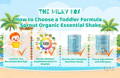
How to Choose a Toddler Formula

How to Choose a Toddler Formula | The Milky Box
  • Confirm the Recommended Age

    Choose a product formulated for the child’s age. A toddler nutritional shake must not replace breast milk or infant formula during the first 12 months. For help understanding stages and intended uses, see The Milky Box’s Toddler Formula Ultimate Guide.

  • Decide Whether Supplementation Is Needed

    The American Academy of Pediatrics notes that most healthy toddlers do not need toddler formula or specialized nutritional drinks. A shake may be considered when additional support is appropriate, but persistent feeding or growth concerns deserve professional assessment.

  • Review the Complete Nutrition Panel

    Protein: type and amount per serving.

    Carbohydrate: total and added sugars, plus sweetening ingredients.

    Fatsecide: sources and overall balance.

    Nutrients relevant to the child’s diet: such as iron, calcium, vitamin D, vitamin B12, iodine, zinc, fibre, and DHA where included.

    Serving size: preparation instructions, and number of daily servings.

  • Check Ingredients and Allergens

    Plant, cow’s-milk, and goat’s-milk proteins have different dietary and allergen considerations. Absence claims—such as no dairy, soy, artificial colors, or artificial flavors—may help narrow choices, but they do not by themselves prove nutritional suitability. Children with diagnosed or suspected allergies should change products only with qualified guidance. See the parent’s guide to plant-based and dairy-free options.

What's Inside Sprout Organic Essential Shake?

What's Inside Sprout Organic Essential Shake? | The Milky Box

Families may choose plant-based nutritional shakes because of a dairy-free or vegan lifestyle, environmental values, or individual dietary needs. However, ordinary almond, oat, coconut, and rice drinks are not nutritionally interchangeable with products formulated specifically for young children.


The World Health Organization’s complementary-feeding guideline emphasizes varied, nutrient-dense diets for children aged 6–23 months. A nutritional shake should therefore complement—not reduce—the range of appropriate foods offered.


Sprout Organic Kids Essential Shake is formulated for children aged 12 months and older and provides plant protein, fibre, iron, calcium, vitamin D, vitamin B12, iodine, algal DHA, and probiotics. The range highlights certified organic ingredients, fermented pea and brown-rice protein, and no dairy or soy ingredients. Parents should verify the current package for exact ingredients, nutrient values, allergens, and directions.

  • Vanilla: a mild profile that may be easier to mix with foods.

  • Chocolate: a cocoa-based profile; cocoa flavor is not the same as confectionery.

  • Both: evaluate sweetness, serving size, and total diet rather than assuming that flavor determines quality.

Flavor in Toddler Formula: Myth vs. Fact

Flavor in Toddler Formula: Myth vs. Fact | The Milky Box


Many common beliefs about flavored toddler nutritional shakes are based on misconceptions rather than scientific evidence. For example, a chocolate flavor does not automatically mean a product is high in sugar. The chocolate taste may come from cocoa, while the overall sweetness depends on the complete formulation, including the amount and type of sweetener used. Likewise, vanilla is not inherently healthier than chocolate. These are simply different flavor profiles, and the nutritional quality of a product should be evaluated based on its complete ingredient list, nutrient composition, and serving size—not the flavor alone.


Another common misunderstanding involves natural flavor. Although the term may sound like it refers exclusively to whole vanilla beans or cocoa, it is actually a regulated food-labeling category that describes flavoring ingredients derived from qualifying natural sources using approved preparation or processing methods. It does not necessarily mean that the product contains only whole source ingredients. When choosing a toddler nutritional shake, parents are encouraged to look beyond the flavor name and instead consider the product's overall nutritional value, ingredient quality, and how it fits into a balanced, age-appropriate diet.


Flavor in Toddler Formula: Myth vs. Fact | The Milky Box


Another common misconception is that artificial flavor is automatically unsafe. In reality, permitted artificial flavorings must comply with applicable food safety regulations before they can be used in foods. The terms natural and artificial describe regulatory categories based on the source of the flavoring, but they do not, by themselves, determine whether a product is nutritious or appropriate for children. Parents should instead consider the product's overall nutritional profile, ingredient quality, and intended use.


Similarly, flavored nutritional shakes do not automatically make toddlers picky eaters. Children's food preferences are shaped by many factors, including repeated exposure to a variety of foods, family eating habits, and the overall feeding environment. Research suggests that offering different nutritious foods regularly and without pressure can help broaden food acceptance over time. It is also important to remember that a formulated plant-based nutritional shake is not the same as an ordinary plant-based drink. Products specifically designed for toddlers may differ substantially in their protein, fat, vitamins, minerals, and overall nutritional composition, making them suitable for different purposes than standard plant milks.


Vanilla or Chocolate? | The Milky Box


Choosing a toddler nutritional shake is not about selecting the plainest flavor. It is about choosing an age-appropriate product with a suitable nutritional profile and using it in a way that supports—not displaces—a varied diet. Vanilla and chocolate are simply flavor profiles. Ingredient quality, sweetness, nutrient composition, serving size, individual needs, and overall eating habits matter more.


When parents understand flavor terminology and read the complete label, they can choose with greater confidence—whether their child prefers mild vanilla or richer cocoa.


Written by Suzanne Renee',

Infant Nutrition Expert

Suzanne Renee' is an accomplished professional with extensive expertise in the area of infant nutrition, dedicated to promoting the health and wellbeing of children. She started this journey as a foster parent.


Suzanne has emerged as a strong proponent of the European baby formula and has become a full-time writer on the subject.

In her free time, she enjoys camping, hiking, and going to church.

Frequently Asked Questions

Is vanilla healthier than chocolate for toddlers?

Not necessarily. Compare the complete formulation, including sugars, sweeteners, serving size, protein, fibre, fats, vitamins, and minerals.

Is chocolate flavor the same as chocolate candy?

No. A nutritional product may obtain chocolate flavor from cocoa and differs substantially from confectionery that is high in added sugar.

Does natural flavor mean there are no chemicals?

No. Everything in food is made of chemical substances. “Natural flavor” is a legal category for qualifying flavoring materials and processes.

Can toddlers have a flavored nutritional shake every day?

Follow the manufacturer’s directions and consider the child’s full diet. Ask a pediatrician or dietitian when supplementation is needed regularly or when feeding and growth are concerns.

Should a nutritional shake replace meals?

Generally, no. It is intended to complement a varied diet unless a qualified healthcare professional recommends a different use.

Where can I buy these formulas in the US?

Through The Milky Box with all-inclusive pricing — import duties, customs, and tracked shipping covered. See our shipping policy for delivery details.

References

U.S.-Related & American Academy of Pediatrics Citations

American Academy of Pediatrics. (2023,October 20). AAP: Most toddlers don’t need toddler formula. HealthyChildren.org. 

https://www.healthychildren.org/English/news/Pages/why-most-toddlers-dont-need-toddler-formula.aspx


American Academy of Pediatrics. (2024,August 14). How to reduce added sugar in your child’s diet: AAPtips. HealthyChildren.org. 

https://www.healthychildren.org/English/healthy-living/nutrition/Pages/How-to-Reduce-Added-Sugar-in-Your-Childs-Diet.aspx


Spill, M. K., et al. (2019). Repeated exposure to food and food acceptability in infants and toddlers: A systematic review. The American Journal of Clinical Nutrition, 109(Suppl. 1), 978S–989S. https://doi.org/10.1093/ajcn/nqy308


U.S. Food and Drug Administration. (2026). Foods; labeling of spices, flavorings, colorings, and chemical preservatives, 21 C.F.R. § 101.22. 

https://www.ecfr.gov/current/title-21/chapter-I/subchapter-B/part-101/subpart-B/section-101.22


Gerrish, C. J., & Mennella, J. A.(2001). Flavor variety enhances food acceptance in formula-fed infants. The American Journal of Clinical Nutrition, 73(6), 1080–1085. 

https://doi.org/10.1093/ajcn/73.6.1080


World Health Organization. (2023). WHO guideline for complementary feeding of infants and young children 6–23 months ofage

https://www.who.int/publications/i/item/9789240081864

E.U-Related Citations 

European Parliament and Council of the European Union. (2008). Regulation (EC) No. 1334/2008 on flavourings and certain food ingredients with flavouring properties for use in and on foods. Official Journal of the European Union, L 354, 34–50. https://eur-lex.europa.eu/eli/reg/2008/1334/oj/eng

Australia-Related Citations 

Others Citations 

Mennella, J. A., Griffin, C. E., & Beauchamp, G. K. (2004). Flavor programming during infancy. Pediatrics, 113(4),840–845. https://doi.org/10.1542/peds.113.4.840


Mennella, J. A., Jagnow, C. P., & Beauchamp, G. K. (2001). Prenatal and postnatal flavor learning by human infants. Pediatrics, 107(6), e88. https://doi.org/10.1542/peds.107.6.e88


Mennella, J. A., Kennedy, J. M., & Beauchamp, G. K. (2006). Vegetable acceptance by infants: Effects of formula flavors. Early Human Development, 82(7), 463–468. https://doi.org/10.1016/j.earlhumdev.2005.12.001


Mennella, J. A., & Trabulsi, J. C.(2012). Complementary foods and flavor experiences: Setting the foundation. Annals of Nutrition and Metabolism, 60(Suppl. 2), 40–50. https://doi.org/10.1159/000335337


Miller, K. B., Hurst, W. J., Payne, M. J.,Stuart, D. A., Apgar, J., Sweigart, D. S., & Ou, B. (2009). Impact of alkalization on the antioxidant and flavanol content of commercial cocoa powders. Journal of Agricultural and Food Chemistry, 57(19), 9169–9180. https://doi.org/10.1021/jf901670p


Ventura, A. K., & Mennella, J. A.(2011). Innate and learned preferences for sweet taste during childhood. Current Opinion in Clinical Nutrition and Metabolic Care, 14(4), 379–384. https://doi.org/10.1097/MCO.0b013e328346df65

Disclaimer:


Please be aware that this information is based on general trends in babies, and it is not medical advice. Your doctor should be your first source of information and advice when considering any changes to your child’s formula and when choosing your child’s formula. Always consult your pediatrician before making any decisions about your child’s diet or if you notice any changes in your child.


Breastfeeding is the best nutrition for your baby because breast milk provides your child with all the essential nutrients they need for growth and development. Please consult your pediatrician if your child requires supplemental feeding.


Suzanne Renee' is an accomplished professional with extensive expertise in the area of infant nutrition, dedicated to promoting the health and wellbeing of children. She started this journey as a foster parent. Suzanne has emerged as a strong proponent of the European baby formula and has become a full time writer of the subject. In her free time, she enjoys camping, hiking and going to church.

Leave a Comment:

Comments will be approved before showing up.

Name:

Email:

Comment:

Read Next: